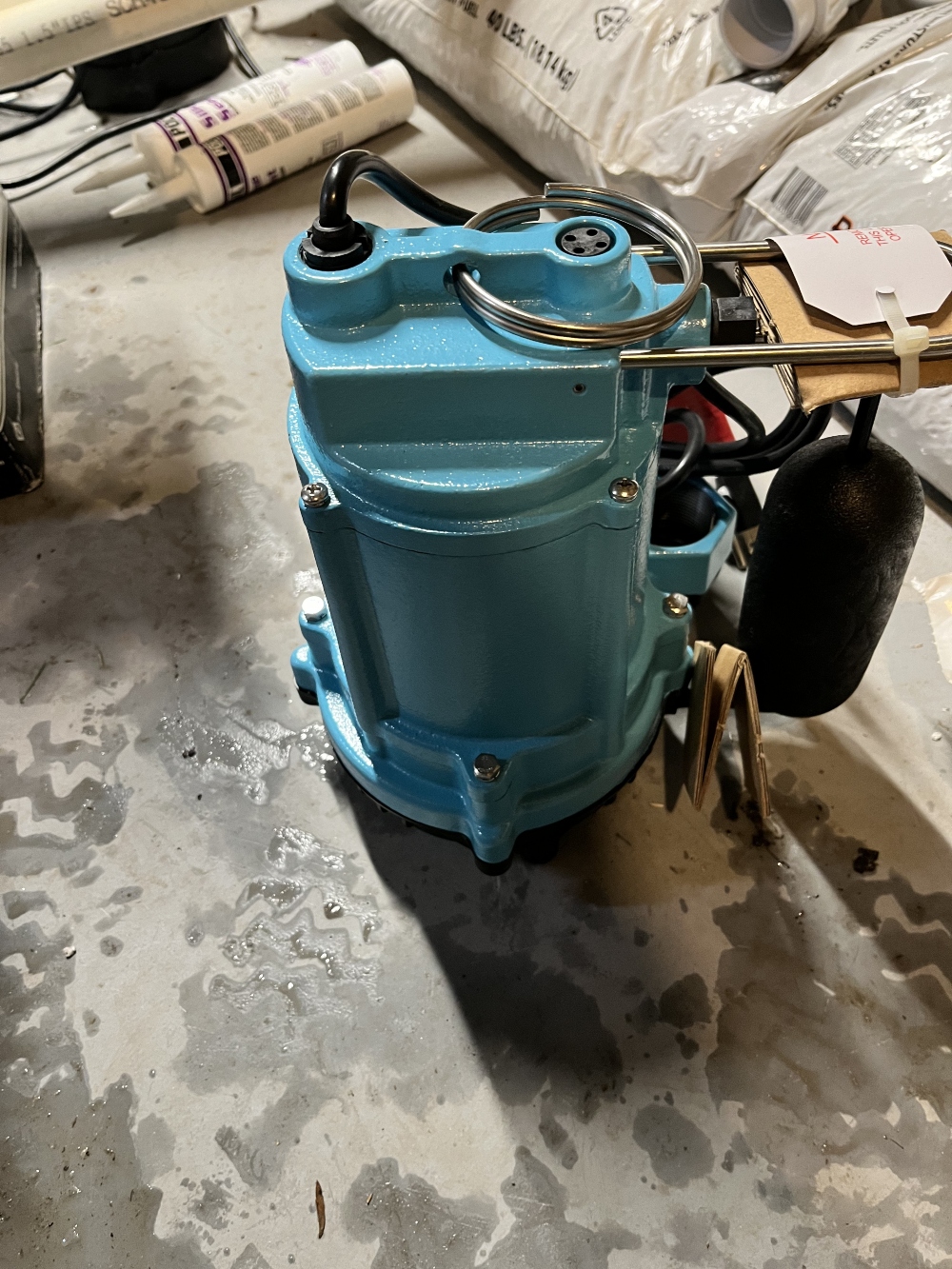


Sump pump failure in winter catches a lot of Seacoast homeowners off guard, usually in the middle of a storm rather than on a calm afternoon when there's still time to fix it. A pump that ran fine all spring and summer can quietly stop working the first time the ground freezes, and by the time anyone notices, there's already water on the basement floor.
Portsmouth, Dover, Exeter, and Durham all deal with the same setup every winter. Groundwater keeps moving even after the surface freezes, snowmelt and freeze-thaw cycles push moisture toward foundations, and the sump pump is the only thing standing between that water and a finished basement. When the pump can't keep up, the damage shows up fast.
This isn't a problem unique to older homes or homes with a history of wet basements. A pump that's never given anyone trouble can fail the moment its discharge line freezes solid or the power goes out during a nor'easter. The good news is that most winter sump pump failures are predictable across the entire Seacoast service area, and predictable problems can be prevented.
In this article, you will learn about:
- Why sump pumps fail more often once winter sets in
- The warning signs that your pump won't make it through the season
- How to winterize a sump pump before the first hard freeze
- What to do if your pump fails in the middle of a storm
Keep reading to find out exactly which parts of your sump pump system are most likely to fail this winter and how to get ahead of it before the next storm rolls in.
Why does my sump pump fail right when winter hits hardest?
A sump pump that's been reliable for years can still fail in winter, and it's rarely because the pump itself is defective. Cold weather changes the conditions the pump has to work in, and those changes are what usually cause the breakdown.
The specific ways winter attacks a sump pump system are worth walking through one at a time, because catching any one of them early makes it much easier to avoid a failure. Three issues show up more than any others across Portsmouth, NH, Dover, NH, and the rest of the Seacoast footprint.
The discharge line freezes and traps water right where it started
The discharge line carries water away from the pump and out of the house, usually running along the exterior wall before emptying somewhere the water can drain safely away from the foundation. When that line sits exposed to freezing temperatures, water inside it can freeze solid.
Once the line is frozen, the pump keeps trying to push water out, but it has nowhere to go. The pump either shuts down on a safety switch or keeps running against a blocked line until it burns out. Either way, water backs up into the pit and eventually overflows into the basement.
This shows up in coastal towns like York, ME and Kittery, ME just as often as it does further inland, since raw wind off the water can freeze an exposed discharge line faster than a sheltered one. Wrapping the exposed section in foam pipe insulation before the first hard freeze stops most of this before it starts.
A power outage during a nor'easter shuts the pump down cold
Sump pumps run on electricity, and Seacoast winter storms are exactly the kind of weather that knocks power out. A nor'easter that dumps heavy snow or ice is often the same storm dropping enough water to push the sump pit toward its limit, and that's precisely when the power tends to go.
Without electricity, a standard sump pump does nothing. The float switch can rise and trigger the pump all it wants, but with no power reaching the motor, the pit just keeps filling. A basement can go from dry to flooded in the same span of hours the power is out.
This is the scenario a battery backup or water-powered backup system is built for, and it's worth thinking through before the outage happens rather than during one.
A few basics make an outage far less risky for the pump:
- A battery backup sized to run the pump for at least several hours
- A charged phone or radio to track storm updates and outage length
- A generator with a properly installed transfer switch, if one is already on the property
- A neighbor or family member who can check the basement if you're away when the storm hits
None of these fixes the outage itself, but together they buy enough time to get the pump back online before standing water becomes the bigger problem. A pump that's already running on a working backup rarely turns a power outage into a flooded basement.
Ice-cold water pushes an aging float switch past its limit
The float switch tells the pump when to turn on and off based on water level in the pit. It's a mechanical part, and mechanical parts wear out. Cold water is denser and can behave differently than the warmer groundwater a float switch handles in summer, which puts extra strain on a switch that's already close to the end of its life.
A float switch that sticks, tilts, or corrodes stops giving the pump an accurate read on water level. Sometimes that means the pump runs constantly and burns out early. Other times it means the pump never turns on at all, even as the pit fills.
A preventative maintenance visit catches a worn float switch before winter turns it into a failure. Homeowners in Eliot, ME and across Southern Maine tend to see this problem most in pumps that haven't been serviced in more than a couple of years.
The warning signs your sump pump won't survive this winter
Most sump pump failures don't happen without warning. The pump usually gives some sign that something is off well before it actually quits, and catching that sign in October or November is a lot less stressful than discovering it during a January thaw.
What to watch for turns sump pump maintenance from a guessing game into a short, specific checklist. These three signs are the ones worth taking seriously the moment they show up.
It's cycling, grinding, or rattling more than it used to
A healthy sump pump turns on, clears the water, and shuts off in a smooth, fairly quiet cycle. If the pump has started cycling on and off rapidly, running longer than it used to, or making a grinding or rattling noise, something inside it has changed.
Rapid cycling often points to a float switch that's misreading water level or a check valve that's letting water flow back into the pit after each cycle, forcing the pump to run again almost immediately. Grinding or rattling usually means debris has gotten into the impeller or a bearing is wearing out.
None of these symptoms mean the pump has failed yet, but they're a clear signal that failure is coming if nothing changes. A camera inspection of the surrounding drain lines can also rule out a blockage further downstream that's putting extra pressure on the pump itself.
Water sits in the pit and never fully drains
Open the sump pit lid and take a look. If there's standing water sitting well above the bottom of the pit even when it hasn't rained or snowed recently, the pump isn't doing its job the way it should.
A pump that's genuinely keeping up with groundwater should leave the pit close to dry between cycles, with water only rising when there's active inflow. Water that lingers points to one of a few problems:
- A weak or failing pump that can't move water fast enough
- A clogged intake screen restricting flow into the pump
- A discharge line that's partially blocked or already starting to freeze
- A check valve stuck open, letting pumped water drain right back down
Any one of these on its own is worth addressing before winter, and it's common for more than one to be happening at once in a pump that's been neglected for a few seasons. Homes in Somersworth and Rochester, NH with older sump systems tend to show a combination of these issues rather than just one.
It's already older than it should be
Sump pumps have a working life, typically somewhere in the range of seven to ten years for a standard pump run under normal conditions. A pump that's already near or past that mark is a much bigger risk heading into winter, even if it seems to be running fine right now.
Age matters because winter conditions are the hardest the pump will face all year. A pump that's coasted through mild spring and summer rain events can still fail the first time it has to fight a frozen discharge line or run nonstop during a multi-day storm.
If you don't know how old your pump is, that's worth finding out. A quick inspection can usually tell whether the pump has a few more winters left in it or has reached the end of its life. Sometimes that means pump installation instead of another repair, especially on a unit already past the ten-year mark.
Winterizing your sump pump before the first hard freeze
Once you know why sump pumps fail in winter and what the warning signs look like, the next step is actually doing something about it. Winterizing a sump pump system doesn't take long, and most of the work needs to happen before temperatures drop, not after.
The goal is simple: make sure the pump, the power source, and the discharge line can all handle whatever the season throws at them. Here's what that looks like in practice.
Test the pump and the backup power now, not in January
Testing a sump pump takes a few minutes. Pour a few gallons of water into the pit and watch the pump turn on, clear the water, and shut off cleanly. If it hesitates, runs longer than expected, or doesn't trigger at all, that's the time to address it, weeks before a storm puts real pressure on the system.
If there's already a battery backup installed, check that the battery holds a charge and that the backup pump actually kicks in when primary power is simulated as off. A backup system that hasn't been tested in a year or more is a real risk, since batteries lose capacity over time even when they've never been used.
- Pour water into the pit and confirm the primary pump cycles correctly
- Disconnect or simulate a power loss and confirm the backup engages
- Check the battery charge level and replace it if it's aging or weak
- Listen for unusual noise during the test cycle
Running through this short sequence once in the fall catches most problems before they turn into an emergency.
Clear and insulate the discharge line before it ices shut
Since a frozen discharge line is one of the most common causes of winter sump pump failure, it deserves specific attention. Walk the line from where it exits the house to where it empties outside, and look for any section that sits exposed above grade.
Exposed sections are the ones most likely to freeze. A few steps make the biggest difference here:
- Insulate any part of the discharge line that runs above ground
- Confirm the line is sloped so it drains completely instead of holding standing water
- Clear away snow or ice buildup around the outlet after every storm
- Move the outlet further from the foundation if it currently empties too close to the house
A discharge line that empties too close to the foundation is worth fixing regardless of the season, since that water just finds its way back toward the house. For homes with a history of freezing discharge lines, a check valve and a properly routed, insulated line usually solves the problem for good rather than requiring seasonal workarounds every year.
Decide if a battery or water-powered backup makes sense
A backup system exists for one reason: to keep the pit from overflowing when the primary pump can't run, whether that's from a power outage or a mechanical failure. Battery backups run off a charged battery and typically last anywhere from several hours to a day or more depending on the model and how much water they're moving. Water-powered backups use household water pressure to create suction and don't depend on electricity or a battery at all.
Neither option is automatically the right choice for every home. A battery backup makes sense where power outages are the bigger risk. A water-powered backup can be a better fit for homes with strong municipal water pressure and a history of extended outages. Either system needs to be sized correctly for the pit and installed so it activates automatically without anyone having to flip a switch during a storm.
If you're weighing the options, a sump pump installation and repair visit is the fastest way to get a straight answer on what fits your setup, without guessing based on a generic recommendation that wasn't built around your actual pit and pump.
Your sump pump just failed mid-storm. Now what?
Even a well-maintained system can fail, and if it happens during an active storm, the priority shifts from prevention to damage control. What you do in the first hour matters more than almost anything else at that point.
Staying calm and working through a short, deliberate sequence limits how much water gets in and how much cleanup follows. Here's the order that actually helps.
Cut the water damage first
If water is already rising in the pit or spreading across the basement floor, the first move is limiting how much gets in and how much it touches. Move anything valuable or easily damaged off the floor and away from the affected area immediately.
If it's safe to do so, shut off electricity to any outlets or fixtures in the flooded area before doing anything else. Water and live electrical circuits are a serious hazard, and it's not worth the risk of checking the pump itself before power in that area is confirmed off.
A wet-dry shop vacuum or a simple bucket-and-drain approach can buy time on a small amount of standing water, but it's a stopgap, not a fix. The Federal Emergency Management Agency puts a number on why that matters: just five inches of standing water can cause more than $25,000 in damage to a home. The pump still needs to come back online or the water keeps coming.
Know when it's a job for a professional, not a bucket
Some pump failures are simple enough to troubleshoot on the spot, like a tripped GFCI outlet or a float switch that's gotten physically stuck against the side of the pit and just needs to be freed. Others point to a bigger problem that needs a professional look before the pump goes back to work.
Call for emergency plumbing service when the pump won't run at all even with confirmed power, when it's running constantly without clearing the pit, or when water keeps rising despite your best efforts to manage it manually. Not every water problem in a flooded basement is actually the sump pump. Sometimes a backed-up main line is doing the damage instead, and that calls for a different kind of visit than a straightforward pump repair.
A backed-up main sewer line can look identical to a failed sump pump from the basement floor. Common causes of sewer backups include root intrusion, grease buildup, and aging pipe, any of which can flood a basement floor the same way a dead pump does.
Fix the actual cause so it doesn't happen again
Once the immediate flooding is under control, the last step is figuring out why the pump actually failed and fixing that specific issue, not just resetting the pump and hoping for the best. A pump that failed once under storm conditions is at real risk of failing again the next time those same conditions repeat.
Common root causes worth ruling out after a failure:
- A discharge line that froze or is still partially blocked
- A float switch that's worn out or was never sized right for the pit
- A pump that's simply too old or undersized for the volume of water it's handling
- A missing or failed check valve letting water cycle back into the pit
Homeowners in Exeter and Durham who've had a pump fail once tend to see it happen again within a season or two if the underlying cause never gets addressed. A proper sewer line inspection after a failure is often the difference between a one-time scare and a recurring problem every time the forecast turns bad.
Conclusion
Winter sump pump failure isn't random, and it isn't something Seacoast homeowners have to just hope doesn't happen to them. The causes are specific and predictable: frozen discharge lines, power outages during storms, and worn-out float switches that can't keep pace with cold weather. Catching the warning signs early, whether that's unusual noise, standing water in the pit, or a pump that's simply gotten old, gives you real time to act before a storm forces the issue.
A short winterizing routine in the fall, backed by a working backup system, closes most of the gap between a pump that survives the season and one that doesn't. If a failure does happen mid-storm, knowing the difference between a quick fix and a real mechanical problem keeps a bad night from turning into weeks of cleanup and repair.
If your sump pump is already showing signs of trouble, or if you'd rather have someone experienced look at it before the next storm than after one, Seacoast Sewer and Drain can take a look and give you a straight answer on what it needs. The team has been handling pump failures across the Seacoast long enough to know exactly where these problems start, and they'd rather fix the cause now than send you back to a flooded basement in February.
Recent Blog Post
Customer Reviews