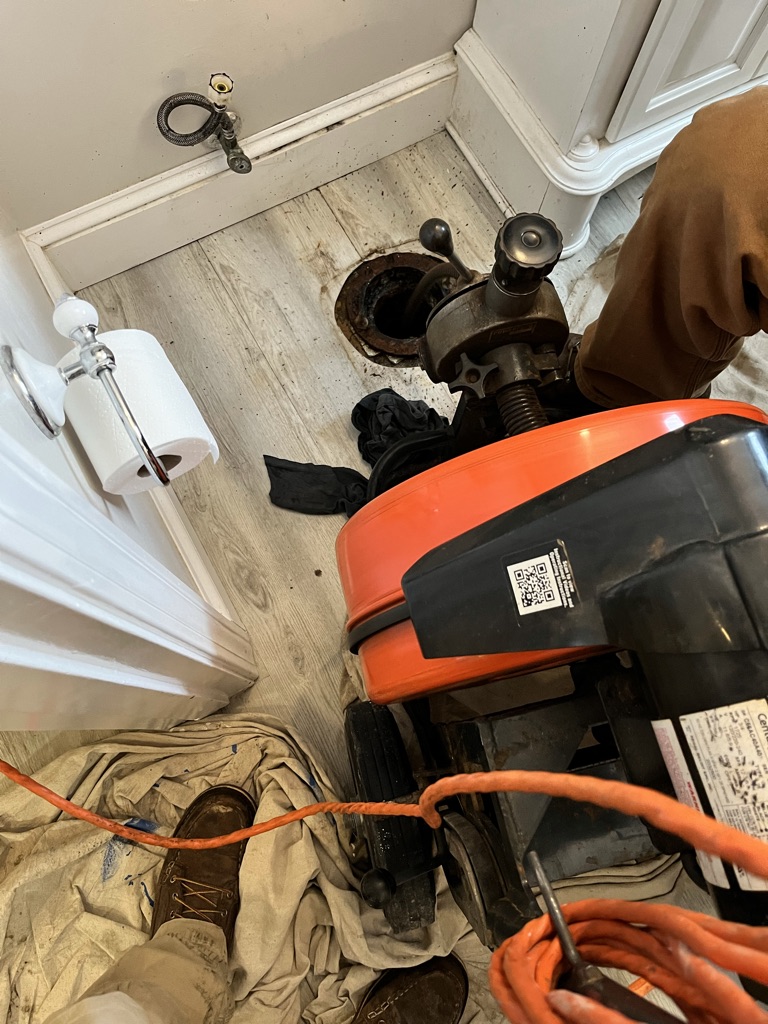


Clogged drain vs. sewer line problem: how to tell the difference before you call


A slow sink and a house-wide backup can feel similar in the moment, but a clogged drain vs. a sewer line problem are two very different situations that call for two very different responses. One is usually a quick fix. The other can mean sewage in your basement if it gets ignored.
Most homeowners never learn to tell the two apart until they are standing in an inch of water wondering what happened. The good news is that the signs are not subtle once you know what to look for, and a few minutes of checking fixtures around the house can save you a very bad night.
This distinction also matters because the wrong response can make things worse. Running more water through a fixture to try to push past a local clog is fine. Doing the same thing when the real problem sits in the main line just adds more water to a system that already cannot drain.
In this article, you will learn about:
- How a local drain clog behaves compared to a sewer line problem
- The warning signs that point specifically to the main line
- What to do once you have figured out which one you are dealing with
Keep reading to find out how a five-minute check around your house can tell you exactly which kind of plumber call you actually need to make.
How a local drain clog behaves compared to a sewer line problem
A local clog and a main line problem look similar at first glance, slow drainage and the occasional gurgle, but they behave very differently once you start paying attention to which fixtures are affected and how.
A local clog sits close to a single fixture, usually caused by hair, grease buildup, soap residue, or debris trapped near the drain opening or in that fixture's own trap. It affects that one sink, tub, or toilet and nothing else in the house.
A sewer line problem sits in the shared pipe that carries wastewater from the entire house to the municipal connection. Because every fixture ties into that same line, a blockage there does not stay contained to one spot.
The U.S. Environmental Protection Agency estimates that at least 23,000 to 75,000 sanitary sewer overflows occur nationwide each year, and blockages are consistently one of the leading causes.
The fixture test
The fastest way to tell the two apart is to run water and watch what happens elsewhere in the house. This single test does more diagnostic work than almost anything else a homeowner can check without professional equipment.
- Run the kitchen sink and watch the bathroom sink and tub for any reaction
- Flush a toilet and listen for gurgling in the shower or another toilet
- Run the washing machine and check the nearest floor drain or basement fixture
- Check if the lowest drain in the house, often a basement floor drain, shows any sign of backup
If nothing else in the house reacts, the problem is almost certainly local. If flushing one toilet makes another fixture gurgle or rise, wastewater is running into a shared line that cannot move it along fast enough, and that points toward the main line rather than a single trap.
Where symptoms show up first
Gravity plays a specific role in how a main line problem presents itself. Water and wastewater always seek the lowest point in the plumbing system.
That means a basement floor drain, a first-floor shower, or a laundry tub on the lowest level of the house will usually show trouble before a second-floor bathroom does, even though the blockage itself might be located outside under the yard. Homeowners are often confused when their upstairs bathroom works fine while their basement fills with water, but that pattern is actually a textbook sign of a main line issue rather than evidence against it.
A few features of a home make this pattern more likely to show up, and worth keeping in mind while checking fixtures.
- Homes with a finished basement bathroom or laundry hookup, since those fixtures sit lowest in the system
- Older homes where the main line runs at a shallower slope than current code would require
- Properties with a history of tree root sewer line intrusion already on record
- Homes on a shared or older municipal connection where the tie-in point sits further from the house
Any one of these factors on its own is not a red flag, but a home with several of them together is more likely to see a main line problem present itself through the basement first rather than through an upstairs fixture.
Why timing and cause differ between the two
A local clog usually builds gradually. Grease coats a pipe wall a little more with every dish washed, or hair accumulates in a shower drain over weeks, until one day the water barely moves. The homeowner often sees it coming.
A main sewer line problem can develop just as gradually from root intrusion or aging pipe, but it can also turn from a minor nuisance into a full backup very suddenly. A root mass finally catching enough debris, or a heavy rain event overwhelming an already compromised line, can convert a slow, gurgling drain into standing water within a matter of hours.
A few common triggers tend to push a slow-developing main line issue into a sudden emergency.
- Heavy rainfall increasing groundwater pressure around an already weakened section of pipe
- A single large flush of wipes, paper towels, or other non-flushable material
- Seasonal ground movement shifting an already cracked joint further out of alignment
- A root mass finally growing large enough to catch passing debris and form a full blockage
Recognizing that a slow main line problem can turn urgent quickly is part of why gurgling or occasional multi-fixture backups should not be dismissed as a one-time fluke.
The warning signs that point specifically to the main line
Beyond the basic fixture test, a handful of specific signs consistently point toward a main line problem rather than a simple local clog, and recognizing them early gives homeowners a real head start before things get messy.
These signs tend to show up together rather than in isolation, which is itself useful information. A single symptom on its own might mean nothing serious, but two or three appearing at the same time is a much stronger signal.
- Multiple fixtures backing up or draining slowly at the same time
- Gurgling sounds coming from drains that are not currently in use
- Sewage odor that seems to come from everywhere rather than one specific fixture
- Water or sewage backing up through a floor drain when another fixture runs
- Standing water or a wet, unusually green patch appearing in the yard
Sewage backing up into a home is not just a mess to clean up.
According to the Massachusetts Department of Public Health, sewage carries pathogens including bacteria, viruses, mold spores, and protozoans that are present in large numbers, which is part of why a suspected sewer line backup deserves faster action than a slow bathroom sink.
The CDC advises avoiding any contact with floodwater that may carry sewage contamination for exactly this reason.
The cleanout check
Most homes with sewer service have an exterior cleanout, a capped pipe usually near the foundation, that offers one more useful clue. Removing the cap and checking whether water or sewage is sitting inside it can confirm a main line suspicion without needing a camera.
Standing water or sewage inside the cleanout, especially if it rises when a fixture inside the house is run, is close to definitive proof that the blockage sits in the main line rather than in any individual fixture's own drain. A video drain inspection after this check confirms exactly where the problem sits, since a pressurized cleanout on a badly backed-up line can release contaminated water when the cap comes off and a visual read is safer than repeated manual checks.
When multiple signs point to something more serious
A camera inspection becomes the next logical step once fixture testing and the cleanout check both point toward a sewer backup problem in the main line. The inspection shows exactly where the blockage sits and what caused it, which changes what happens next considerably.
A blockage caused by grease or debris often clears with jetting alone. A blockage caused by root intrusion working through cracked joints, or a section of pipe that has physically collapsed, needs a different conversation entirely, one that may eventually involve repair or sewer line excavation rather than routine cleaning.
What to do once you have figured out which one you are dealing with
Knowing which category your problem falls into changes what happens next, both in terms of what a homeowner should try on their own and how urgently professional help is needed.
A confirmed local clog is often manageable without emergency service. A confirmed main line problem changes the calculation entirely, since delay tends to make the eventual cleanup and repair more expensive rather than less.
If the fixture test points to a local clog
A local clog affecting a single fixture is usually the least urgent of the two situations, and a homeowner has a reasonable range of options before needing to call anyone.
- Try a plunger designed for the specific fixture type, sink versus toilet plungers are not interchangeable
- Check and clear the fixture's own trap if it is accessible without special tools
- Avoid chemical drain cleaners, which can damage older pipe and create hazards for a technician later
- Call for residential drain cleaning if the clog does not clear with basic effort
- Watch the same fixture over the following days, since a clog that returns quickly may be a deeper issue rather than a one-time blockage
A local clog that keeps coming back at the same fixture despite repeated clearing is worth mentioning to a technician even if each individual episode seemed minor, since a pattern like that sometimes points to a problem further down the line than a simple trap clog. A drain snaking service can clear a stubborn fixture-level clog that a plunger alone does not resolve.
If the signs point to the main line
A confirmed or suspected main line problem calls for a different level of urgency. Continuing to run water through fixtures adds volume to a system that is already struggling to drain, and every additional flush or load of laundry increases the odds of an actual sewage backup inside the home.
The safest move is to stop using water-heavy fixtures, the washing machine, dishwasher, and multiple showers in particular, until a technician has had a chance to look at the line. Calling for a Seacoast emergency plumber is the right response here rather than waiting to see if the problem resolves on its own, since main line issues very rarely improve without intervention.
What a technician does differently for main line problems
A technician responding to a suspected main line issue approaches the job differently from a routine drain call, starting with pipe camera diagnostics before attempting to clear anything. That usually means camera work first, followed by the appropriate clearing method once the cause is known.
Hydro jetting handles grease and softer buildup efficiently, while a heavier root intrusion or structural issue may need a more involved response. The technician's read on the footage determines which path makes sense rather than defaulting to the same method for every call, which is part of why a proper diagnosis matters as much as the actual clearing work that follows it.
Preventing the next main line problem
Once a main line issue is resolved, a lot of homeowners want to know how to avoid a repeat. The answer usually depends on what caused the original problem, since a one-time debris blockage and a chronic root intrusion issue call for different prevention strategies.
A few habits make a real difference in how often a main line runs into trouble again after a repair.
- Scheduling preventative drain maintenance on a regular interval rather than waiting for symptoms
- Being mindful of what goes down drains, especially grease, wipes, and feminine products
- Getting a camera inspection after any major landscaping work near the sewer line path
- Addressing known root activity before it reaches the point of a full blockage
- Keeping a record of past service calls so a technician can spot a developing pattern
Homes with a documented history of root intrusion or aging pipe benefit the most from a proactive schedule, since the cost of routine maintenance is consistently lower than the cost of a sewer line replacement brought on by years of ignored warning signs.
Conclusion
Telling a local clog apart from a main sewer line problem does not require special training, just a few minutes spent checking how your fixtures behave together rather than in isolation. A slow sink that stays isolated to one fixture is a very different situation from a toilet flush that makes your basement drain gurgle.
Getting this distinction right matters because the response is different for each one. A local clog can often wait a day or handle itself with a plunger, while a main line problem gets worse the longer water keeps running through a system that cannot move it along.
If your fixtures are showing the signs of a shared problem rather than an isolated one, do not wait for it to turn into standing water in your basement. Contact Seacoast Sewer and Drain to get an accurate diagnosis and the right fix the first time.
Recent Blog Post
Customer Reviews