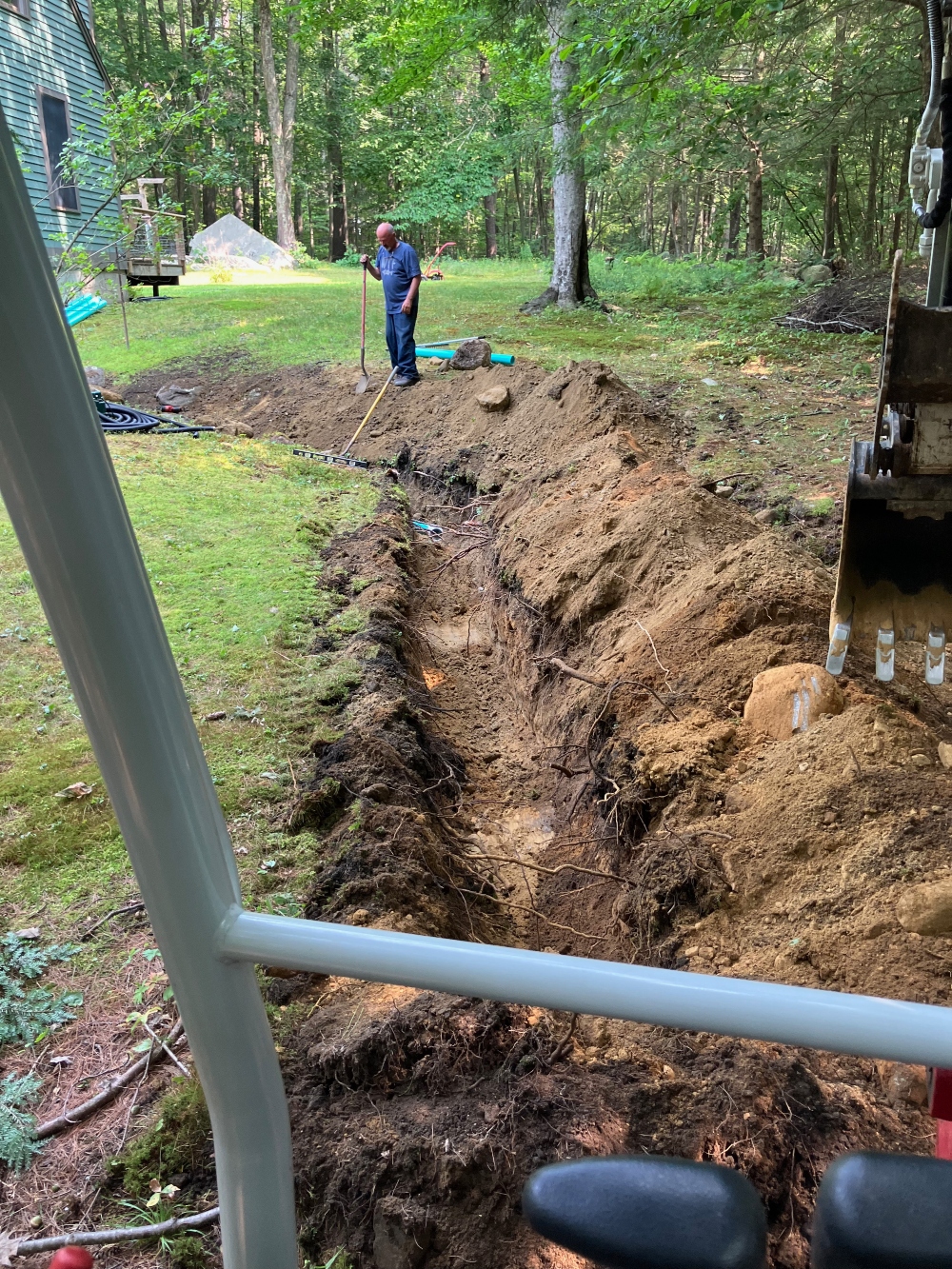


Tree root intrusion into sewer lines is one of the most persistent underground plumbing issues affecting homes across New England. The combination of mature trees, aging sewer infrastructure, and harsh freeze-thaw soil cycles creates an environment where roots naturally seek out pipes, enter through the smallest openings, and gradually expand into full blockages.
For homeowners in New Hampshire and Maine, the challenge is not just removing roots once they appear but understanding how to prevent them from returning. Prevention requires recognizing early symptoms, understanding how intrusion happens, and knowing when professional intervention is necessary before structural damage escalates.
This guide breaks down the full lifecycle of root intrusion, from the first subtle warning signs to long-term prevention strategies used by sewer professionals.
In this article, you will learn about:
- The first slow drain that seems harmless until it keeps coming back
- How tree roots actually find their way into underground sewer pipes
- The trees most likely to damage sewer lines around New England homes
- Warning signs your sewer line already has root intrusion
- How professionals remove roots and prevent them from coming back
Keep reading to understand how root intrusion develops, what it looks like at each stage, and what you can do now to protect your sewer line before a minor slowdown turns into a major repair.
The first slow drain that seems harmless until it keeps coming back no matter what you flush or clear
Root intrusion rarely begins as a dramatic failure. It starts with subtle performance changes that many homeowners dismiss as normal plumbing behavior. A slightly slow shower drain or occasional toilet hesitation often seems insignificant at first, but when the same problem returns after every attempt to fix it, something deeper is going on.
Why recurring clogs are often the earliest sign of root intrusion
Unlike a grease or debris clog, root intrusion is progressive. The blockage grows over time because roots continue to expand inside the pipe as long as moisture and nutrients are present. A temporary clog happens once, stays localized to one fixture, and resolves fully after cleaning. Root intrusion behaves differently. It repeats, it worsens, and it spreads across multiple fixtures as the root mass grows.
The pattern usually starts with a minor drainage slowdown in one fixture. Over the following weeks or months, you notice intermittent backups during high water usage, like when the washing machine and shower run at the same time. Eventually, recurring clogs appear across multiple fixtures, and in the worst cases, flow through the main sewer line becomes fully restricted.
When a clog reappears after basic clearing methods, it is rarely a surface issue. It usually indicates a deeper structural problem in the main sewer line.
How older New England sewer systems create easy entry points for roots
Many homes in New Hampshire and Maine still rely on aging sewer infrastructure that was never designed for modern long-term durability. Clay tile, cast iron, and early PVC systems are especially vulnerable to joint separation and cracking over time. Clay pipe joints shift due to soil movement. Cast iron corrodes from the inside out, creating surface pitting that weakens the pipe wall. Rubber seals in older PVC systems degrade with age and lose their ability to keep the connection watertight.
According to the U.S. Environmental Protection Agency, the nation needs at least $630 billion in wastewater infrastructure investment over the next 20 years, a figure driven largely by the deterioration of pipe systems installed decades ago beneath residential neighborhoods.
Even small imperfections in these aging pipes are enough for fine root hairs to enter the system. Once inside, roots quickly adapt to the nutrient-rich environment of wastewater and begin expanding.
The mistake of assuming it is just a temporary blockage
One of the most costly assumptions homeowners make is treating recurring slow drains as temporary clogs. This often leads to repeated plunging, chemical drain cleaners, or snaking without addressing the underlying issue.
Temporary fixes can actually make things worse. Aggressive snaking may push roots deeper into the pipe or damage already weakened pipe walls. Chemical cleaners can corrode older pipe materials. Each time the symptom is treated without diagnosing the cause, the real problem gets worse and more expensive to fix.
Root intrusion does not resolve on its own. Without intervention, it progresses steadily until the pipe becomes fully obstructed or collapses.
How tree roots actually find their way into underground sewer pipes
Tree roots are not aggressive in the way many homeowners imagine. They do not break into pipes forcefully. Instead, they respond naturally to moisture, oxygen, and nutrients escaping from small openings in sewer lines. Understanding this process is the first step toward preventing it.
The role of tiny cracks and joint separations in attracting roots
Sewer pipes develop small vulnerabilities over time due to shifting soil, temperature changes, and material aging. A micro-crack forms or a joint gap opens, and moisture begins seeping into the surrounding soil. Root hairs detect this moisture gradient and grow toward it. Once they reach the opening, they enter the pipe and begin expanding inside.
A fully intact pipe carries very low root entry risk. Minor cracks raise that risk to moderate. Open joints are high risk. Broken or collapsed sections are almost certain to attract roots. The condition of your pipe directly determines how vulnerable it is to intrusion.
Why moisture and waste make sewer lines a long-term water source for roots
Sewer systems provide a constant combination of moisture and organic material, making them highly attractive to root systems. Even a small leak becomes a long-term resource that roots will continue to exploit year after year.
Inside a compromised sewer line, roots find a continuous water supply, nutrient-rich organic waste, and a stable underground growing environment. This combination accelerates root growth far beyond normal soil conditions. Over time, roots form dense mats that trap debris and restrict flow, turning a minor intrusion into a full sewer backup.
How seasonal ground freezing and thawing worsens pipe openings
New England's seasonal climate plays a major role in sewer line deterioration. Freeze-thaw cycles create repeated stress on underground pipes that compounds year after year.
In winter, soil freezes and expands around the pipe, pushing joints out of alignment. The pipe shifts under pressure. When spring arrives, the thaw leaves gaps and voids in the surrounding soil. Water infiltration during wet seasons then weakens the pipe structure further. Each cycle slightly increases the size of entry points, making it easier for roots to enter and expand over time. This is one reason sewer problems in older homes tend to get worse gradually rather than all at once.
The trees most likely to damage sewer lines around New England homes
Not all trees pose the same level of risk to sewer systems. Some species have highly aggressive root structures that actively seek out water sources underground, while others are relatively contained.
Fast-growing species that aggressively search for water sources
Certain trees are especially problematic in residential areas due to their rapid growth and expansive root systems. Willow trees are the most aggressive water-seekers and carry very high sewer risk. Silver maple and Norway maple both have wide-spreading root systems that rank as high risk. Poplar varieties grow fast and aggressively underground. American elm, while prized for its canopy, also sends roots outward in search of moisture.
A study published by the U.S. Forest Service found that tree roots are responsible for more than half of all sewer blockages, with damage concentrated in older pipe systems that have joints or cracks. The study also noted that preventive maintenance of older sewer sections is far more cost-effective than emergency repair after roots cause a collapse.
These species are commonly found in residential neighborhoods across New England, increasing the likelihood of sewer line proximity.
Yard landscaping decisions that unintentionally increase sewer risk
Many sewer problems begin with landscaping choices made years or even decades earlier. Trees planted for shade or aesthetics may unknowingly be positioned directly above or near the sewer line path.
Common landscaping risks include planting large trees near utility easements, installing garden beds over sewer line routes, and ignoring underground utility maps before planting. Root systems naturally grow toward moisture sources, and a sewer line with even a minor crack becomes a magnet. A tree planted near the sewer path today may not cause problems for several years, but once those roots reach the moisture-rich soil near the pipe, entry begins through any available opening.
How root systems extend far beyond visible tree branches
A common misconception is that root spread matches the size of the tree canopy. In reality, roots often extend significantly farther. Small ornamental trees can send roots 10 to 20 feet from the trunk. Medium residential trees typically reach 20 to 40 feet. Large mature trees can push root systems 40 to 80 feet or more in every direction.
This means sewer lines located far from visible branches can still be at risk depending on root expansion direction. A large maple on the opposite side of the yard may still have roots running directly through your main sewer line.
Warning signs your sewer line already has root intrusion
Root intrusion develops gradually, but it produces clear warning signs as the blockage severity increases. Recognizing these signs early is the difference between a routine cleaning and a major sewer line repair.
Gurgling drains and slow flushing across multiple fixtures
One of the earliest indicators is abnormal drainage behavior across multiple fixtures at the same time. It often starts with an occasional gurgling sound in a toilet or sink. Then drains throughout the house begin slowing down. Water levels in floor drains or basement drains start fluctuating. Eventually, partial backups occur during heavy water use.
A gurgling toilet usually means air is trapped by an obstruction in the main line. A slow sink drain suggests partial pipe blockage. A bubbling shower drain points to a restriction in the main sewer line. When multiple fixtures are affected, the issue is typically located in the main sewer line rather than in individual branch drains.
Sewage odors around the yard or basement drains
Persistent odors are another strong indicator that the sewer line has been compromised. These smells result from sewer gas escaping through damaged sections of the pipe.
The problem usually begins as a minor odor near interior drains. It increases during water use as pressure changes push gas through the openings. Over time, the odor becomes noticeable outdoors near the yard or foundation. In severe cases, there is a continuous sewer gas presence that does not go away regardless of water use. Odors near basement drains often indicate a vent or line restriction. Odors in the yard suggest an underground leak.
Backups that temporarily clear but always return
Temporary relief after plunging or snaking is one of the most misleading signs of root intrusion. The initial blockage occurs, you or a technician clears it with pressure or a cable, and flow seems to return. But the roots remain in the pipe, and the blockage reforms quickly.
If a backup clears briefly and then returns, it means a partial obstruction remains. If it returns repeatedly, there is active root growth inside the line. If multiple drains are affected each time, the problem is in the main sewer line and will not be solved by clearing individual fixtures.
How professionals remove roots and prevent them from coming back
Effective root management requires both immediate removal and long-term prevention. Clearing roots alone is not enough to stop recurrence if the pipe still has openings that allow roots to re-enter.
Mechanical root cutting vs hydro jetting explained
Professionals typically use two primary cleaning methods depending on the severity of the intrusion. Mechanical root cutting uses rotating cutting blades to break apart dense root masses and restore partial flow quickly. It is effective for large obstructions but does not clean the pipe walls.
Hydro jetting uses high-pressure water streams to clean the full interior of the pipe. It removes debris, smaller root fragments, and buildup from the pipe walls, restoring the full diameter of the line. In many cases, technicians combine both methods, using mechanical cutting first to remove the major root mass, then following with jetting to clear remaining debris and restore full flow.
While effective, these methods do not prevent roots from returning if the structural openings in the pipe remain.
Why camera inspections are essential before permanent repair decisions
A sewer camera inspection provides a clear view of pipe condition and helps determine whether cleaning alone is sufficient or whether repair is necessary. The technician inserts a camera into the sewer line, navigates the full pipe length, identifies root entry points and damage, and evaluates the structural integrity of the pipe.
Minor intrusion with an otherwise intact pipe may only require cleaning and monitoring. Repeated intrusion through the same entry points suggests that pipe lining is needed to seal the openings. Visible structural damage, such as cracks, offsets, or partial collapse, typically calls for targeted replacement.
Researchers at Virginia Tech found that the nation's installed water pipeline infrastructure needs an estimated $3.6 trillion in replacements over the next 25 years. Accurate condition assessment through camera inspection helps homeowners avoid unnecessary replacement while also ensuring that genuinely damaged pipe sections are identified and addressed before they fail completely.
Without inspection data, repairs may only provide temporary relief.
Long-term solutions like pipe lining or targeted replacement
Permanent prevention requires sealing or replacing the damaged section of pipe. Pipe lining inserts a resin-coated liner inside the existing pipe, effectively sealing cracks and joints from the inside and preventing future root entry without requiring excavation.
Targeted replacement removes only the damaged section of pipe and installs new durable piping, restoring full structural integrity to the affected area. This approach is necessary when the pipe has collapsed or shifted too far out of alignment for lining to work.
The process begins with a full diagnosis of the sewer line condition, followed by selecting the appropriate lining or replacement method. The damaged sections are repaired or replaced, and the system is verified with a post-repair camera inspection to confirm the work was done correctly.
These solutions address the root cause of intrusion rather than just the symptoms.
Conclusion
Tree root damage to sewer lines is a gradual but persistent problem across New England, driven by aging infrastructure, aggressive native tree species, and seasonal soil movement. While early symptoms such as slow drains or occasional backups may seem minor, they often signal deeper structural issues forming underground.
Temporary clearing methods like snaking or hydro jetting can restore flow, but long-term protection requires addressing pipe condition through lining or replacement. Without sealing entry points, roots will continue to return.
The most effective prevention strategy is early detection through professional inspection. Identifying intrusion in its early stages helps avoid extensive excavation, reduces repair costs, and protects both landscaping and underground infrastructure from long-term damage. Contact Seacoast Sewer and Drain to schedule an inspection and find out whether roots have already found their way into your sewer line.
Recent Blog Post
Customer Reviews