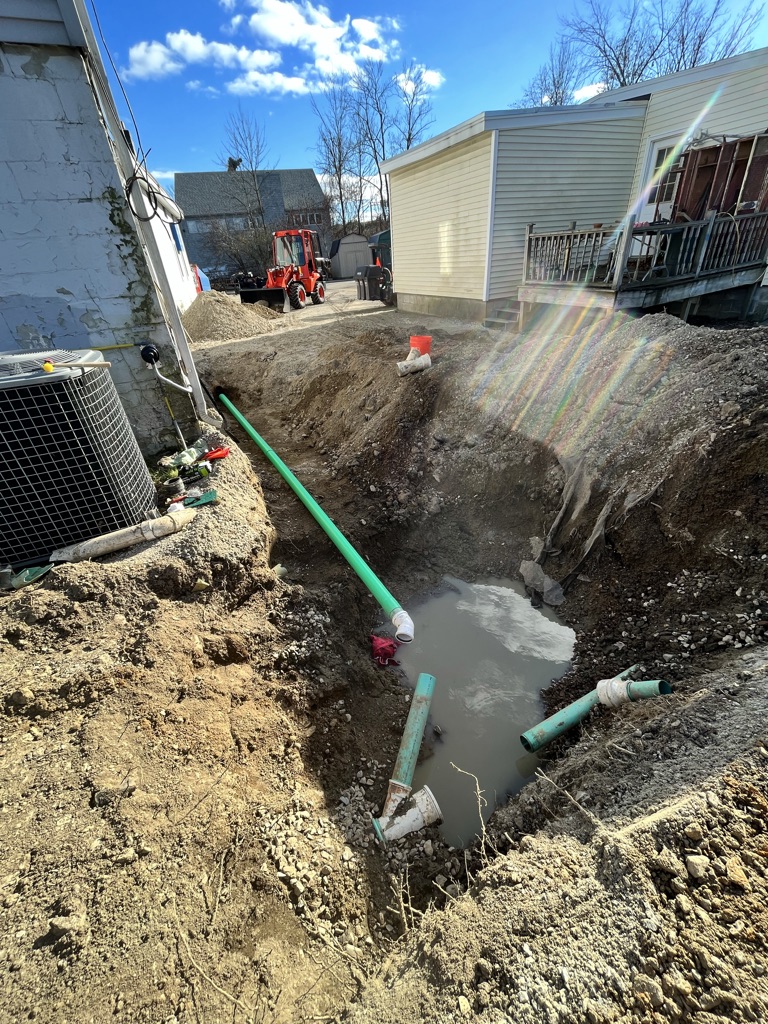


Few things disrupt a home like a failing sewer line, and the deeper underground the damage sits, the harder it is to fix without getting a shovel in the ground. Sewer line excavation is the process of digging into your yard or property to access underground sewer pipes for repair or replacement when damage is too severe for less invasive methods.
Most homeowners will deal with sewer issues at some point. You might notice slow drains, bad smells, or wet spots in your yard. These warning signs often mean your sewer line needs attention. While some repairs use modern methods that don't require much digging, traditional excavation is sometimes the only way to fix serious problems.
Understanding what happens during residential sewer excavation helps you prepare for the process. You'll learn when digging is necessary, what steps are involved, and how much it might cost. This guide covers everything from spotting early warning signs to choosing the right repair strategy for your situation.
In this guide, you'll find:
- When traditional digging is needed
- Warning signs of sewer line issues
- Steps in the excavation process
- Available repair strategies post-excavation
- Budgeting and other considerations
Keep reading to understand when excavation is truly necessary, what to expect at each stage of the project, and how to protect your property and budget throughout the process.
When traditional digging is needed
Not all sewer problems can be fixed without digging. Some pipe conditions make traditional excavation the only reliable choice, especially when the damage is too severe for modern methods to work properly.
Situations where excavation is necessary for repairs
Traditional trench sewer repair becomes necessary when your pipe has completely collapsed. When sections of the pipe cave in, there's no hollow space left for trenchless equipment to move through. The crew needs direct access to remove the crushed segments and install new pipe.
Severe offsets also require excavation. These happen when sections of pipe shift and no longer line up correctly. The misalignment prevents proper installation of trenchless liners or new pipes pulled through the old line. A sewer line inspection can confirm whether an offset or belly is severe enough to require digging before any trenchless work is attempted.
A pipe belly is another situation that demands digging. This occurs when a section of your sewer line sags and creates a low spot. Water and waste collect in these areas instead of flowing properly. You can't fix the slope problem without excavating and reinstalling the pipe at the correct grade.
Major root intrusion throughout the line often needs excavation too. When tree roots have completely infiltrated and damaged large sections of pipe, removing them and replacing the pipe requires full access.
Differences between trenchless and excavation methods
Trenchless methods work from small access points and don't require digging up your entire sewer line. Crews insert new lining material or pull new pipe through the existing damaged pipe. Your yard, driveway, and landscaping stay mostly intact.
Traditional excavation involves digging a continuous trench along the entire path of damaged pipe. Workers remove everything above the pipe including soil, grass, concrete, or pavement. They pull out the old pipe, install new sections, then refill and restore the surface. Understanding the cost factors for sewer replacement in Seacoast NH for both approaches helps you choose the right method for your situation before committing to either.
Key differences:
- Surface disruption: trenchless creates minimal damage while excavation tears up your property
- Time required: trenchless often finishes in one to two days; excavation takes longer
- Access needed: trenchless uses entry and exit points; excavation exposes the whole line
- Restoration costs: trenchless needs little repair work; excavation requires rebuilding surfaces
Why severe damage often requires digging
Collapsed pipes leave no working path for trenchless equipment to travel through your sewer line. The machinery needs an intact tube to function. When the pipe structure fails completely, crews must dig down to physically remove debris and broken sections.
Trenchless installation relies on the existing pipe maintaining enough structural integrity to support new materials. Severely corroded or crushed pipes can't provide this foundation. Direct replacement through excavation becomes the only dependable solution.
Sometimes the entire pipe layout needs correction. If your original sewer line was installed at the wrong depth or follows a problematic path, trenchless methods just replicate the same flawed route. Excavation lets workers reposition the line correctly from the start.
Warning signs of sewer line issues
Broken or damaged sewer lines show clear warning signs before they become emergencies. Recognizing problems like backups, soggy yards, and sewage smells helps you act before extensive excavation becomes necessary.
Persistent backups and slow drainage issues
Multiple drains backing up at the same time signals a main sewer line problem rather than an isolated clog. You might notice water coming up in your shower when you flush the toilet, or your washing machine causing bathroom drains to overflow.
Slow drainage throughout your home points to blockages deep in the sewer line. A single slow drain usually means a local clog in that fixture. When all your drains empty slowly, the problem exists in your main line. This is also the moment to consider whether residential drain cleaning can still resolve the issue or whether you're already past that point.
Gurgling sounds from toilets and drains indicate air trapped in your sewer line. This happens when water struggles to flow past blockages or damaged sections. The air has nowhere to escape except back through your plumbing fixtures.
Frequent clogs that keep returning after you clear them mean something is wrong with the pipe itself. Tree roots, cracks, or collapsed sections create ongoing blockage points that drain cleaning methods cannot fix permanently.
Wet spots or sinkholes in the yard
Unexplained soggy areas in your yard often appear directly above damaged sewer lines. Leaking wastewater saturates the soil and creates persistently damp patches even during dry weather.
Depressions or actual sinkholes form when leaking water erodes soil beneath the surface. The ground slowly collapses into the void created by the escaping sewage. These indentations may start small but grow larger as more soil washes away.
Unusually lush grass growing in strips or patches across your lawn indicates sewage feeding the plants below. The area appears greener and grows faster than surrounding grass because the waste acts as fertilizer. Water line leak detection methods can help determine quickly whether the source of the saturation is your sewer lateral or your water supply line before any digging begins.
Strong sewage odors around the property
Sewer gas smells inside your home mean cracked pipes are allowing gases to escape. These odors often appear near drains, in basements, or around foundation walls where pipes enter your house.
Persistent sewage smells in your yard point to breaks in underground lines. Fresh waste should flow away through intact pipes. When you smell sewage outside, wastewater is leaking into the surrounding soil.
The smell of rotten eggs or methane around your property creates health risks beyond just unpleasant odors. According to the U.S. Environmental Protection Agency, raw sewage contains bacteria, viruses, protozoa, and helminths that can produce illnesses ranging from gastroenteritis to hepatitis and dysentery. If you notice these odors alongside other warning signs, contact a Seacoast emergency plumber rather than waiting on a scheduled visit.
Steps in the excavation process
Sewer excavation services follow a structured approach that moves from identifying the problem to restoring your property. Each phase requires specific tools, techniques, and careful planning to ensure your sewer line functions properly after the work is complete.
Initial inspection and problem identification
Before any digging begins, professionals must locate and assess the damage to your sewer line. This starts with pipe camera diagnostics, where a small waterproof camera travels through your pipes to pinpoint exactly where the problem exists. The camera reveals cracks, blockages, tree root intrusions, or collapsed sections.
Once the inspection identifies the issue, technicians mark the affected area on your property. They use the camera footage to measure how deep the pipe sits and how much damage exists. This information determines whether you need a simple repair or complete replacement.
The inspection also reveals what lies near your sewer line. Professionals check for other utility lines like water, gas, or electrical cables. They contact utility companies to mark these lines, which prevents accidents during digging. Your service provider creates a detailed plan that includes the excavation depth, trench length, and equipment needed for your specific situation.
Digging and accessing the damaged pipe
Excavation crews use backhoes or mini excavators to dig trenches down to your sewer line. The trench width typically ranges from 2 to 3 feet, giving workers enough space to access the pipe safely. For deeper lines, crews may need to install trench boxes or shoring to prevent soil collapse.
Workers remove soil in layers and place it nearby for later use during backfilling. They dig carefully as they approach the pipe depth to avoid damaging the existing line or nearby utilities. The crew exposes several feet of pipe on either side of the damaged section to ensure proper access for repairs.
Repair, replacement, and site restoration
After exposing the damaged section, technicians either repair or replace the affected pipe. Small cracks may only need a coupling or wrap, while severe damage requires cutting out the bad section and installing new pipe. Workers join new sections using proper fittings and seals to prevent future leaks.
Once repairs are complete, crews test the line to verify it works correctly. They may run water through the system or use pressure tests to check for leaks. After passing inspection, workers backfill the trench in layers, compacting each layer to prevent settling.
The final step restores your yard to its original condition. Crews replace topsoil, reseed grass, or reinstall landscaping features that were removed. While the repair area may look different initially, proper restoration techniques help your property return to normal within weeks. If you want to understand the full cost picture before work begins, reviewing how sewer line repair contractors in Portsmouth, NH are evaluated helps you ask the right questions and avoid surprises on the final invoice.
Available repair strategies post-excavation
Once the excavation work exposes your damaged sewer line, you have several repair options depending on the extent of the damage and your budget. The approach you choose affects both immediate costs and long-term performance of your plumbing system.
Partial pipe repairs for localized damage
Partial repairs work best when damage affects only a specific section of your sewer line. A plumber can cut out the damaged portion and install a new pipe segment to replace it. Residential sewer repair services typically begin with a full camera assessment to confirm the damage is truly isolated before recommending this approach.
This approach saves money because you only pay for the materials and labor needed for the affected area. The repair typically involves cutting away the broken section and connecting new pipe using couplings or joints that match your existing system.
Common situations for partial repairs:
- Small cracks or holes in otherwise sound pipes
- Root intrusion in a single area
- Localized corrosion or collapse
- Damage from ground shifting in one spot
Your plumber will inspect the rest of the line to confirm the damage is truly isolated. If multiple problem areas exist along the line, a full replacement becomes more cost-effective than several partial repairs.
Full sewer line replacement solutions
Underground sewer line replacement becomes necessary when damage extends throughout your system or when repairs would only provide a temporary fix. This involves removing the entire old pipe and installing a completely new line from your home to the main sewer connection. According to the U.S. EPA, the nation's sewer collection systems are worth over $1 trillion in total, which reflects why full replacement, while expensive, is often the most cost-effective long-term investment when a line has deteriorated beyond repair.
A full replacement costs more upfront but eliminates ongoing repair expenses. You get a warranty on the new installation and won't face repeated excavation projects. Reviewing sewer line replacement in NH cost factors and signs it's time to upgrade helps you build an accurate budget before the first shovel hits the ground.
The process requires digging a trench along the entire pipe route. Workers remove the old pipe, prepare the trench bed properly, lay the new pipe with correct slope, and backfill the excavation.
Full replacement makes sense when your pipes have reached the end of their lifespan or when you're dealing with outdated materials that fail frequently.
Upgrading to more durable pipe materials
Modern pipe materials offer significant advantages over older options like clay or Orangeburg pipes. During your excavation project, you can upgrade to materials that resist common problems and last decades longer.
Material options include:
Material
Benefits
Typical lifespan
PVC
Affordable, corrosion-resistant, lightweight
50-100 years
ABS
Impact-resistant, good for cold climates
50-80 years
Cast iron
Durable, quiet operation, fire-resistant
75-100 years
HDPE
Flexible, chemical-resistant, leak-proof joints
50-100 years
PVC remains the most popular choice for residential sewer lines because it resists root intrusion and doesn't corrode. The smooth interior prevents buildup that can cause clogs.
Cast iron costs more but provides superior strength in areas with heavy soil or traffic above the line. HDPE works well in areas with unstable soil because its flexibility accommodates ground movement without cracking. If you've experienced cracked sewer pipe issues repeatedly in the same section, upgrading the material during excavation is the most practical way to prevent the same failure from recurring.
Budgeting and other considerations
Planning for sewer line excavation requires understanding the main cost factors, preparing for yard disruption, and recognizing the value of doing the job right.
Factors that impact excavation pricing
Sewer pipe excavation cost depends on several specific variables that affect your final bill. Trench depth plays a major role, with costs typically ranging from $50 to $250 per foot depending on how deep workers need to dig to reach your pipe.
The length of pipe requiring excavation directly affects labor hours and material needs. Longer runs mean more trenching, more pipe replacement, and more backfill work.
Soil conditions at your property impact excavation difficulty. Rocky soil requires specialized equipment and more time compared to soft earth. Clay and compacted dirt also slow down the digging process.
Site access determines equipment options and labor efficiency. Tight spaces or pipes under driveways and landscaping increase complexity and cost. Permits add to your total expense, with requirements varying by location.
Common cost drivers:
- Pipe diameter and material choice
- Regional labor rates
- Equipment rental needs
- Time of year and weather conditions
- Distance to main sewer line connection
Property disruption and restoration needs
Excavation work creates temporary but significant disruption to your yard and landscaping. Workers dig trenches across affected areas, removing grass, plants, and sometimes hardscaping like patios or driveways.
The excavation footprint extends beyond just the pipe location. Equipment needs access routes, and soil from the trench requires temporary storage on your property.
Restoration costs add to your project budget. You'll need to replace sod or reseed grass, replant removed vegetation, and repair any damaged hardscaping. Backfilled trenches may settle over time, requiring additional fill dirt and leveling.
Plan for limited yard access during the project. Keep pets and children away from work areas for safety. Scheduling an early year plumbing inspection before spring thaw is one way to identify problems early and plan excavation work during drier, more favorable months rather than under emergency conditions.
Long-term benefits of proper sewer repair
Excavation and full pipe replacement solve underlying problems that patch methods cannot address. You eliminate recurring clogs, leaks, and sewage backups that damage your home and property.
Modern pipe materials installed during excavation last 50 to 100 years with minimal maintenance. This durability means you won't face the same issue again in your lifetime.
Proper repairs protect your home's foundation from water damage caused by leaking sewer lines. They also prevent contamination of your yard and groundwater.
A documented sewer line replacement increases your property value. Future buyers gain confidence knowing they won't inherit sewer problems shortly after purchase. Sewer cleaning solutions and regular preventative drain snaking service in the years following a replacement help keep the new system performing at its best with minimal intervention.
Conclusion
Sewer line excavation is a critical process for maintaining your home's plumbing system. When your sewer line fails, excavation may be the only option to restore proper function and prevent further damage to your property.
You need to work with qualified professionals who have the right equipment and experience. The excavation process can take several days or even weeks depending on the scope of work. Proper planning helps minimize disruptions to your daily life and property.
Modern methods like vacuum excavation offer safer and more precise alternatives to traditional digging. These techniques reduce the risk of damaging other underground utilities. However, some situations still require open-top excavation for complete repair access.
Your patience during the process matters. Excavation work is intensive and requires careful execution to meet safety standards and local regulations.
Make sure you understand the timeline and what to expect before work begins. Ask your contractor about the specific steps involved and how they will protect your property. The investment in proper excavation now prevents bigger problems and more expensive repairs in the future.
Contact Seacoast Sewer & Drain to schedule an inspection and get an honest assessment of whether excavation or a less invasive approach is right for your situation.
Recent Blog Post
Customer Reviews