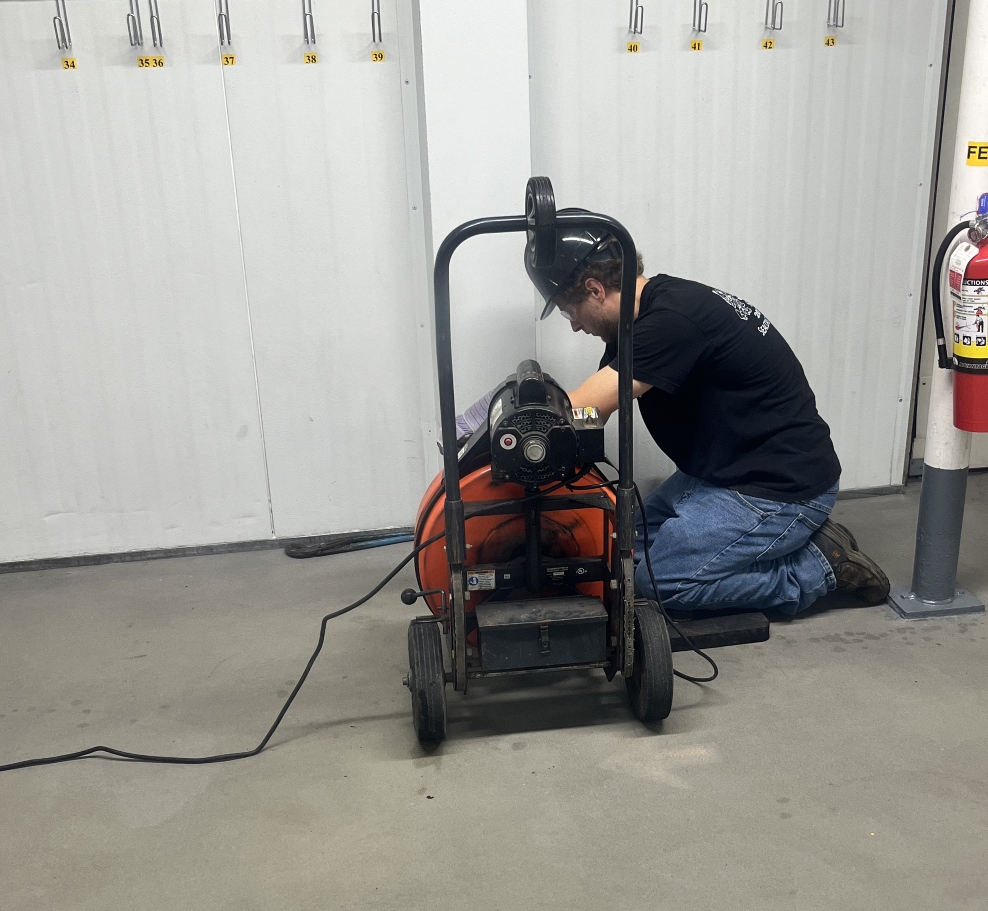


The difference between residential vs commercial drain cleaning comes down to a lot more than building size. The two jobs use different equipment, run on different timelines, carry different consequences when something goes wrong, and demand different experience from the technician on site. A homeowner with a slow kitchen sink and a restaurant owner with a backed-up floor drain during a Saturday dinner rush are not facing the same problem, even if both calls land on the same dispatch board.
Across the Seacoast region, both sides of this work matter. Portsmouth, Dover, Exeter, Kittery, and York all carry a strong residential base alongside a dense layer of restaurants, hotels, commercial kitchens, multi-unit properties, and small businesses that depend on drain systems running cleanly every day. The same contractor often handles both, but the work itself looks meaningfully different from one truck stop to the next, and property owners benefit from understanding why.
This article breaks down the real differences, not the marketing ones. What changes about the pipes themselves. What equipment the job actually requires. How urgency, scheduling, and downtime shift the conversation for commercial work. And, for property managers and business owners, what to look for in a contractor who handles commercial work well, not just residential work scaled up.
In this article, you will learn about:
- How residential and commercial drain systems differ at the pipe level
- The equipment and methods that separate the two jobs
- Why timing, urgency, and downtime change the conversation for commercial work
- What property managers and business owners should look for in a contractor
- Where the two jobs overlap, and where they should never be treated the same
Keep reading to walk away with a clear picture of which kind of drain service your property actually needs.
Residential and commercial drain systems are built differently
The first place these two jobs diverge is in the pipes themselves. A residential drain system is built around the daily rhythms of a single household: kitchen sink, bathroom fixtures, tubs, showers, toilets, laundry, and a main line carrying everything out to the municipal sewer.
A commercial system is built around an entirely different set of demands. Higher fixture counts, larger pipe diameters, longer runs, more grease, more solids, and far more daily volume. A single restaurant kitchen can move more water and waste through its lines in a busy weekend than a typical home moves in a month.
The size and condition of the underlying system drives almost every other decision a contractor makes on site, from cable size to cleaning method to maintenance interval. Getting that read right is the difference between solving a problem once and chasing it for months.
The structural differences that matter most:
- Residential main sewer lines on the Seacoast are typically 4 inches in diameter, with branch lines stepping down to 2 inches or less
- Commercial main lines often run 4 inches minimum, frequently 6 inches or larger for kitchens, hotels, and multi-unit buildings
- Residential fixture counts usually fall between 10 and 20 per home; small restaurants run 30 to 50, hotels run into the hundreds
- Daily waste volume in a commercial setting can exceed residential volume by 10 to 50 times per fixture
- Pipe materials on the Seacoast range from modern PVC to cast iron, clay, and galvanized in older Portsmouth and Dover properties
According to the U.S. Environmental Protection Agency, commercial and institutional buildings discharge significantly higher waste volumes per fixture than residential buildings, and the infrastructure has to be sized accordingly. Treating a 6-inch grease-laden commercial line like a 4-inch household lateral is a recipe for repeat backups.
Two practical realities sit underneath those numbers. First, the bigger and busier the system, the more likely a partial blockage cascades into a multi-fixture failure. Second, older infrastructure on the Seacoast carries decades of freeze-thaw stress, root intrusion, and internal scaling that both residential and commercial systems share, but commercial volume exposes those weaknesses far faster.
Pipe diameter, fixture count, and daily load
Pipe diameter dictates capacity, but daily load dictates how quickly that capacity gets eaten up. A 4-inch residential line carrying household waste sees maybe a few hundred gallons a day at peak. A 6-inch commercial line under a busy restaurant kitchen sees thousands of gallons a day, with grease and food solids in every flush.
Higher fixture counts also mean more shared lines. A backup in a commercial setting rarely stays isolated to one drain. Gurgling toilets in the restroom, a slow bar sink, and a floor drain overflowing in the kitchen are often three symptoms of one blockage deeper in the system.
That is why a residential drain cleaning visit and a commercial service call demand different mental models from the technician. The residential tech is reading a fixture. The commercial tech is reading a building.
Pipe material and age in older Seacoast properties
The Seacoast carries a heavy mix of old and new construction. Older homes in Portsmouth, Dover, and Exeter often have cast iron drain stacks, clay sewer laterals, or transitions between materials that have spent decades absorbing freeze-thaw stress.
Older commercial buildings carry the same materials, often in larger diameters, with retrofits and additions stacked on top of original 19th or early 20th-century infrastructure. Pipe material drives a lot of the work either way.
For both sides, scaling, joint separation, and corrosion combine with whatever the line is being asked to handle daily. A video sewer inspection is often the only way to confirm what condition the pipe is really in before choosing a cleaning method.
Why the underlying system drives every other decision
Once a contractor understands the diameter, material, age, and load of the system in front of them, every other decision gets easier. Cable size. Jetter pressure. Whether snaking alone will hold, or whether the line needs full scouring.
Skip that diagnostic step and the same problems repeat themselves. Snake a grease-coated commercial line without jetting it, and the line backs up again in two weeks. Jet a brittle clay residential lateral at full commercial pressure, and you risk damaging the pipe.
Getting the read right up front is the actual skill, and it is what separates a contractor who handles both kinds of work from one who treats every drain like the last one.
Equipment and method choices change with the job
The equipment used on a residential call and a commercial call overlaps, but the choices, sizing, and techniques diverge in ways that matter. A tech walking into a clogged kitchen sink in a Kittery home and a tech walking into a backed-up floor drain in a Portsmouth restaurant are reaching for different tools, even when the service category sounds the same.
This is one of the most misunderstood pieces of drain work for property owners. Hiring "a drain cleaner" without asking what they actually carry for commercial work often means watching the same residential snake get pushed into a problem that needed a trailer-mounted jetter from the start.
The right method depends on what the line is fighting, how much volume it carries, and how long the fix needs to hold. Each of the main cleaning approaches solves a different problem.
The main methods used across residential and commercial drain work:
- Hand snakes and small drum machines for localized fixture clogs in residential settings
- Sectional cable machines and power snakes for residential main lines and small commercial lines
- Heavy-duty commercial snakes with larger cables and cutting heads for 4-inch and 6-inch commercial lines
- Hydro jetting at 1,500 to 4,000 PSI for grease, scale, and full-pipe restoration on both sides
- Sewer camera inspection for diagnosis on any line where the cause of the problem is not visible
A jetter, a camera, and a range of snakes are the baseline for any contractor handling both residential and commercial work seriously. Every Seacoast Sewer and Drain truck carries a jetter, alongside snaking equipment and camera gear, which is unusual in a market where most operators position jetting as a premium upsell rather than a standard tool.
Snaking on a residential scale
Residential snaking covers most household drain calls. Cables range from a quarter inch to three-quarters of an inch in diameter, and the head selection (basic cutter, grease blade, root cutter) is chosen based on what the line is fighting.
For most residential clogs, snaking is the right call. It is precise, fast, and gets to the obstruction without overworking the line.
A residential drain snaking job in a single-family home typically wraps up in under an hour with the line restored to full flow. The same approach also handles most of the common problems pipe repair service solves at the household level.
Where snaking falls short on commercial lines
Commercial drain snaking uses larger machines, heavier cables, and bigger cutting heads. A 6-inch line carrying a season of grease, food solids, and paper waste needs a cable and a cutter sized for the diameter, not a residential machine pushed past its rating.
Even with the right snake, snaking alone is often not enough. A snake punches a hole through a blockage, restoring flow, but it does not scrape the pipe walls clean.
In a grease-heavy commercial line, that hole closes back up quickly, and the business is back on the phone in weeks. Two or three repeat service calls later, the math tells the property owner what should have happened on the first visit.
Why hydro jetting carries more weight commercially
Hydro jetting uses high-pressure water through a specialized hose and nozzle to scour the inside of a drain line. Where snaking opens a clog, hydro jetting restores the full pipe diameter by blasting away built-up grease, scale, and debris from the pipe walls themselves.
For residential lines, jetting is sometimes the right call, especially for grease-heavy kitchen lines or recurring drain clogs. But it is not the default for every household drain.
For commercial lines, jetting is often the default. Grease trap lines, restaurant kitchen drains, hotel laundry stacks, and any line that handles high daily volume usually needs jetting on a recurring schedule. According to the U.S. Food and Drug Administration, grease accumulation in commercial drain systems is a regulated concern in food service, and proper line maintenance is part of how restaurants stay compliant and operational.
For severe blockages and root-related problems on either side, hydro jetting for severe blockages and root intrusion jetting handle conditions that snaking simply cannot reach.
Camera inspection asks different questions on each side
Camera inspection looks similar on both sides, but the questions being asked are different. On a residential line, a camera is usually answering: is there root intrusion, is the line cracked, is there a belly holding water, and what is the overall condition of the lateral.
On a commercial line, the camera is asking different questions: how much grease buildup is in the line, is the line scaled, are there fittings catching debris, and what maintenance interval will keep this system from backing up during operating hours.
A video pipe inspection is the same tool either way, but the answers feed into different decisions. Residential cameras feed into one-time repair plans. Commercial cameras feed into ongoing service schedules.
Timing, urgency, and downtime work on a different scale
The biggest practical difference between residential and commercial drain work is not the equipment. It is the cost of a problem. A backed-up drain in a home is an inconvenience, sometimes a serious one. A backed-up drain in a restaurant, hotel, or commercial kitchen is lost revenue, lost reputation, and in some cases a forced closure until the line is restored.
That shifts everything about how commercial work gets scheduled, dispatched, and prioritized compared to residential work. The clock runs faster, the stakes run higher, and the maintenance approach has to reflect both.
Understanding where each kind of call falls on the urgency scale helps property owners pick the right contractor and the right response when a problem hits.
A typical residential drain emergency unfolds along these stages:
- Slow drain noticed at a single fixture, often dismissed for days or weeks
- Slow drain spreads to additional fixtures on the same branch line
- Gurgling, sewer gas smell, or water backing up into the lowest drains in the home
- Full backup, often during peak household use like a holiday weekend
- Emergency service call to clear the line and restore flow
Commercial drain emergencies follow a shorter and far more expensive timeline. The same slow drain that a homeowner ignores for two weeks gets noticed at a restaurant within hours because it is interfering with active service, and the response window collapses fast.
Residential calls and same-week service windows
Most residential drain calls run on a same-week, often same-day, schedule. A homeowner with a slow drain has options: run the dishwasher tomorrow, use the other bathroom, wait until a contractor has a normal opening.
The pressure is real, but the timeline has flex. Emergency drain cleaning on the residential side exists for real emergencies, like a basement filling with sewage or a sewer line failure during a holiday weekend.
Knowing the signs you need an emergency plumber helps a homeowner make the right call without escalating every slow drain into a 2 a.m. dispatch. Most household drain work does not need to.
Commercial calls and the cost of every hour of downtime
Commercial drain calls run on a different clock. A restaurant with a clogged main during dinner service loses revenue by the table. A hotel with a backed-up laundry stack loses room turns.
A commercial kitchen with a non-functional floor drain is potentially out of compliance with health code. The cost of one hour of downtime in a busy commercial setting often exceeds the cost of the service call itself by a wide margin.
That changes how commercial work is dispatched. Same-day, often same-hour, response is the baseline expectation. Off-hours service, including overnight and weekend calls, is standard.
Seasonal pressure on the Seacoast commercial market
The Seacoast adds a regional layer to commercial timing. Kittery, Eliot, and York shift dramatically with the summer tourist season. Hotels, restaurants, and seasonal commercial properties run at peak volume from late spring through early fall.
Any drain weakness that built up over the off-season tends to surface under that volume. Smart commercial owners on the Seacoast schedule maintenance ahead of the summer season, not during it.
A pre-season preventative drain snaking and jetting visit in April or May prevents the kind of mid-July call that costs a restaurant a full Saturday of service. The same applies to ongoing sewer cleaning solutions that keep recurring backups from defining the busy season.
Finding a contractor who handles commercial work well
For homeowners, picking a drain contractor is mostly about experience, honesty, and equipment. For property managers and business owners, the bar is higher. A contractor who is excellent on residential work is not automatically the right fit for a 50-fixture restaurant or a 100-room hotel.
The list of things to ask is short, but each item filters out contractors who do not actually do commercial work at the scale required. Treating commercial work like residential work with bigger equipment is a common mistake, and it is the reason so many property managers cycle through contractors before finding one that holds.
Knowing what to ask up front saves the cost of finding out the hard way.
Questions worth asking any contractor before signing on for commercial work:
- What size cable and jetter do you carry for 4-inch and 6-inch commercial lines?
- How many restaurants, hotels, or multi-unit properties do you currently service?
- What is your typical response time for an active backup during operating hours?
- Do you offer maintenance contracts, and what does a typical service interval look like?
- Who answers the phone after hours, and how is overnight dispatch handled?
A contractor who can answer all five quickly is worth keeping. A contractor who hesitates on more than one of them is probably better suited to residential-only work.
Equipment scaled for commercial diameters
Commercial drain work demands equipment scaled for commercial diameters. A real commercial contractor should carry, at minimum, a large-capacity sectional or drum machine sized for 4-inch and 6-inch lines, plus a trailer-mounted or truck-mounted jetter capable of running at commercial pressures and flow rates.
Most residential-focused operations cannot handle a 6-inch grease-laden line with the equipment on their truck. A real commercial contractor can.
Equipment is the easiest thing to verify before hiring. A walk around the truck or trailer tells most of the story.
Experience with food service, hospitality, and multi-unit properties
Commercial drain work has its own patterns. Grease traps and grease interceptors. High-volume laundry stacks. Floor drains under pressure in commercial kitchens. Shared waste lines in multi-unit buildings.
A contractor who has spent years working in food service and hospitality understands those patterns and reads them faster on site. According to the U.S. Centers for Disease Control and Prevention, food service drain failures are a documented contributor to retail food safety violations, and prevention work matters.
Ask about specific experience: restaurants worked, hotels serviced, property managers represented. The answers tell you whether the contractor genuinely operates in the commercial space or treats it as occasional spillover.
Availability that matches commercial reality
Some contractors advertise 24-hour service that turns out to mean a voicemail until morning. Real commercial-capable contractors have someone actually answering the phone, dispatch protocols, and technicians available to roll on a backed-up restaurant drain at 9 p.m. on a Friday.
For property managers handling multiple buildings, ask about service agreements. A contractor who builds maintenance contracts around your portfolio is meaningfully different from one who only quotes individual emergency calls.
A reliable drain cleaning service company treats availability as part of the service, not an upsell. The same goes for choosing a reliable water line repair company for buried infrastructure decisions.
Honest diagnosis and a willingness to say no
This one applies on both sides, but it shows up more sharply in commercial work. A good contractor tells a restaurant owner when a jetting visit will solve the problem and when the underlying line condition means jetting is a short-term fix.
They also tell them when a recurring problem is actually a fixture issue, a grease trap maintenance gap, or a staff training problem upstream, not a drain problem at all. Honest diagnosis sometimes saves the customer money by preventing unnecessary work.
Contractors who recommend the most expensive option on every visit, regardless of what the line actually needs, eventually become the contractor a property manager replaces.
Where the two jobs overlap, and where they should never be treated the same
Residential and commercial drain cleaning share more underlying principles than the marketing implies. Both depend on understanding pipe condition, both reward preventative work over reactive work, and both demand honest diagnosis.
But the differences are real, and treating them as the same job is where property owners get burned. The mismatch shows up in two opposite directions: residential approaches failing on commercial work, and commercial approaches overkilling residential work.
Knowing the boundary is what separates a contractor who handles both well from one who handles one and pretends to handle the other.
Where the two jobs overlap and where they diverge:
- Both depend on accurate diagnosis of pipe condition, age, and material before choosing a method
- Both reward preventative maintenance over reactive emergency work
- Both benefit from a contractor who carries the full range of tools (snake, jetter, camera)
- Residential work prioritizes precision, minimal disruption, and one-time fixes
- Commercial work prioritizes throughput, scheduling, and recurring service contracts
- Pipe diameter, daily load, and downtime cost separate the two operationally
When a residential approach fails on commercial work
A small restaurant in a Seacoast town calls a contractor whose business is 90 percent residential. The contractor sends a tech with a residential snake, clears the immediate backup, and the line runs fine for ten days.
Then it backs up again during a Friday dinner. The contractor returns, snakes it again, and the cycle repeats every two to three weeks for months.
The actual problem was a grease-coated 6-inch line that needed a commercial jetting service to scour the walls and a maintenance contract on a six-week cycle. The total cost of doing the right work once was less than the cumulative cost of the wrong work repeated.
When a commercial approach is overkill on residential work
The reverse happens too. A contractor used to commercial work shows up at a single-family home in Exeter and quotes a full hydro jetting service for a kitchen line that had a localized grease clog under the sink.
The homeowner pays for service that was not necessary, and the contractor leaves with a customer who will not call them back. Overkill on a residential line is just as much a contractor scope problem as underkill on a commercial one.
A well-run sewer and drain contractor scales the equipment, the diagnosis, and the recommendation to the property in front of them, every time.
Why the same trucks can do both well
A practical note for Seacoast property owners and homeowners alike: a contractor who carries the equipment for commercial work is usually a better choice for residential work too, even when the home does not need commercial-grade tools.
Every truck stocked with a jetter, a range of snakes, a sewer camera, and the experience to use them well is a truck that can read a residential problem more accurately than one carrying the minimum.
That is why every Seacoast Sewer and Drain truck carries a jetter alongside snaking equipment, camera gear, and the diagnostic tools needed for both sides. The work scales to the property, not the other way around.
Conclusion
Residential and commercial drain cleaning are the same trade, but they are not the same job. The pipes are sized differently, the equipment is chosen differently, urgency runs on a different clock, and the cost of a failure lands in completely different places. A homeowner with a slow kitchen drain and a restaurant owner with a backed-up floor drain on a Saturday night are both calling the same kind of contractor, but they are asking that contractor to deliver two different kinds of work.
For homeowners across Portsmouth, Dover, Exeter, Kittery, Eliot, York, and the surrounding Seacoast region, the takeaway is straightforward. Pick a contractor with the experience and equipment to read your home accurately, the honesty to tell you when a problem is small, and the judgment to handle the line in front of them with the right tool the first time.
For commercial property owners and managers, the bar is higher. The contractor who handles a 6-inch grease-laden restaurant line is not the same contractor as the one who clears a residential kitchen sink, even when the truck is the same color. Confirm the equipment, the experience, the availability, and the maintenance approach before a problem makes the choice for you.
Whether the call is a single-family home in Eliot or a busy Portsmouth restaurant kitchen, Seacoast Sewer and Drain handles both with the right equipment, an experienced lead tech with more than 15 years in the trade, and someone in the office answering the phone. Reach out today to schedule service or set up a maintenance plan that fits your property.
Recent Blog Post
Customer Reviews