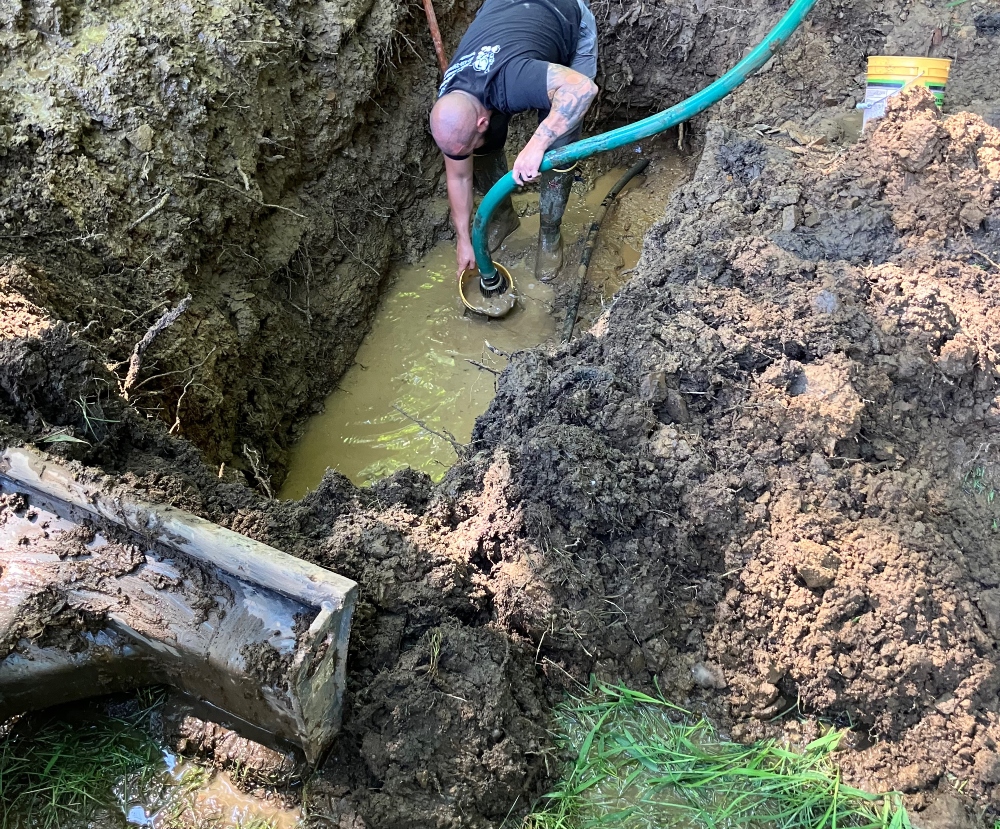


What is sewer line excavation and when is it necessary for your NH or ME home?


Sewer line excavation is one of those services most homeowners hope they never need, but when a pipe has collapsed, shifted out of alignment, or deteriorated beyond what cleaning can fix, it is often the only way to restore the system permanently. For homes across the Seacoast region of New Hampshire and southern Maine, where aging pipe materials and seasonal freeze-thaw cycles put constant stress on underground infrastructure, excavation is a repair method worth understanding before you find yourself in an emergency.
This is not a service reserved for extreme situations. In many cases, a camera inspection reveals damage that simply cannot be addressed from inside the pipe. When that happens, excavation provides direct access to the problem, allows for a complete replacement of the affected section, and restores the sewer line to full function.
Seacoast homeowners dealing with recurring backups, slow drains across multiple fixtures, or outdoor symptoms like wet spots and sinkholes should understand what excavation involves so they can make informed decisions when the time comes.
In this article, you will learn about:
- When a sewer line problem goes beyond what cleaning or snaking can fix
- What sewer line excavation actually involves from start to finish
- What determines the cost and timeline of an excavation project
- How the right diagnosis prevents unnecessary digging
- What to expect after the excavation is complete
Keep reading to understand the full process so you know what questions to ask and what to expect if excavation turns out to be the right solution for your sewer line.
When a sewer line problem goes beyond what cleaning or snaking can fix
Most sewer line issues start with symptoms that feel manageable. A slow drain here, a backup there. Snaking or jetting clears the blockage, flow returns, and the problem seems solved. But when the same issue keeps coming back, the cause is usually structural, not just a buildup of debris.
Why recurring backups often mean the pipe itself is the problem
A clog caused by grease or flushed items behaves differently from a structural failure. A grease clog responds to cleaning and stays resolved. A recurring backup that returns within days or weeks of being cleared almost always points to something wrong with the pipe itself: a crack, a collapsed section, a belly where the pipe has sagged, or joints that have separated enough to allow soil and roots to enter.
In the Seacoast region, where much of the residential pipe infrastructure dates back decades, these failures are common. Clay tile joints shift over time. Cast iron corrodes from the inside out. Even early PVC systems develop seal failures at connection points. According to the EPA, sewer pipe failures typically begin with cracking, lateral deflection, and offset joints, and prolonged neglect leads to collapsed streets, backed-up sewers, and groundwater contamination.
When cleaning restores flow temporarily but the problem keeps returning, it is time to look at the pipe itself rather than what is inside it.
The types of damage that can only be fixed by digging
Not every sewer problem requires excavation. Many issues can be resolved with cleaning, jetting, or internal repair methods. But certain conditions make excavation the only reliable option.
A fully collapsed pipe leaves no pathway for a camera, a liner, or a jetting nozzle. There is nothing left to repair from the inside. A severe belly, where a section of pipe has sagged and creates a low point that traps waste, cannot be corrected without re-establishing proper grade from the outside. Extreme joint misalignment, where pipe sections have shifted far enough apart that waste leaks into the surrounding soil, requires physical removal and replacement. Pipes that have been crushed by heavy surface loads, root growth, or soil pressure need to be dug up and rebuilt.
These are the situations where a camera inspection becomes essential. Without seeing the inside of the pipe, there is no way to know whether the damage can be repaired internally or whether excavation is the only path forward.
How freeze-thaw cycles in New Hampshire and Maine accelerate pipe failure
The Seacoast's seasonal climate is one of the biggest contributors to underground pipe deterioration. Every winter, frost expands the soil surrounding buried pipes and places external pressure on joints and connections. Every spring, the thaw creates voids and shifts the ground, leaving pipes unsupported in spots where they were stable the season before.
This cycle repeats year after year, and the damage compounds. A minor crack becomes an open joint. A slight offset becomes a full separation. Old pipes that were installed at shallow depths or in unstable soil conditions are especially vulnerable. By the time symptoms appear inside the home, the pipe may have been shifting underground for years.
What sewer line excavation actually involves from start to finish
Sewer line excavation is not a guessing game. It follows a structured sequence: diagnose the problem, locate the damaged section, dig to the pipe, replace or repair it, and restore the surface. Every step matters, and skipping the diagnostic phase is one of the most common mistakes homeowners encounter when working with the wrong contractor.
Camera inspection and diagnosis come first
The process always starts with a video drain inspection. A waterproof camera is inserted into the sewer line and navigated through the full length of the pipe. The technician records the footage, identifies the type and location of the damage, measures the depth, and determines whether the pipe can be repaired from the inside or whether excavation is required.
This step is non-negotiable. An honest contractor will not recommend excavation without camera footage showing exactly what is wrong and where. Nick Bundzinski, the owner of Seacoast Sewer and Drain, has described situations where a previous contractor told a homeowner their line needed to be dug up and replaced, but a camera inspection revealed the pipe was a different material and in better condition than reported. The customer avoided an unnecessary excavation and saved thousands of dollars because someone took the time to look before digging.
Locating and accessing the damaged section
Once the camera confirms that excavation is needed, the technician uses the camera's locating transmitter to mark the exact position of the damage on the surface. This determines where the trench needs to go and how deep the crew needs to dig.
In the Seacoast region, residential sewer lines are typically buried between four and six feet deep, though older installations and properties with significant grade changes can be deeper. OSHA's excavation standards require protective systems for any trench five feet or deeper, which means professional crews follow strict safety protocols including shoring, sloping, or shielding to prevent cave-ins during the work.
The crew marks underground utilities before digging to avoid hitting water, gas, or electrical lines. The trench is opened only along the section that needs replacement, not the entire length of the sewer line.
Replacing the damaged pipe and restoring the connection
With the damaged section exposed, the crew removes the failed pipe and installs new material that meets current code standards. The new pipe is connected to the existing system at both ends, and the grade is set to ensure proper flow from the house to the municipal main or septic connection.
For smaller-scale projects, this work can often be completed in a single day. Larger or deeper excavations may take two to three days depending on access, soil conditions, and the length of pipe being replaced. After the new pipe is installed, the trench is backfilled, compacted, and the surface is restored.
What determines the cost and timeline of an excavation project
Excavation costs vary significantly from job to job because no two sewer lines sit in the same conditions. Depth, length, access, and what is sitting above the pipe all influence the final price.
Depth, length, and access are the biggest cost drivers
A pipe buried four feet deep in an open backyard is a different project than a pipe buried six feet deep under a paved driveway. Greater depth means more soil to move, more time in the trench, and more stringent safety requirements. Longer runs of damaged pipe require more replacement material and more labor. Limited access, such as a narrow side yard or a pipe that runs beneath a deck or patio, adds complexity and time.
The presence of tree roots, rock, or high water table conditions can also increase costs. In parts of the Seacoast where rocky soil is common, excavation may require specialized equipment to get through the substrate before reaching the pipe.
Why surface restoration is part of the total project cost
The pipe replacement itself is only one component of the bill. Restoring whatever was above the trench, whether that is lawn, landscaping, a walkway, or a section of driveway, adds to the total. A project that runs through an open yard with grass has minimal restoration costs. A project that crosses a concrete driveway or stone patio has significantly higher restoration needs.
This is why accurate diagnosis matters so much. When the camera pinpoints the exact location and length of the damage, the contractor can plan the smallest possible trench rather than digging up more surface area than necessary.
How the scope compares to the cost of repeated cleaning
Excavation is a larger upfront investment than a single cleaning or jetting visit. But when a pipe has structural damage, repeated cleaning only treats the symptom. The blockage returns, the service calls accumulate, and the cumulative cost of temporary fixes can approach or exceed the cost of a permanent repair.
According to the EPA's Clean Watersheds Needs Survey, the nation needs at least $630 billion in wastewater infrastructure investment over the next 20 years, a figure driven in large part by the accumulation of deferred maintenance on aging pipe systems. At the residential level, the same principle applies: catching a failing pipe early and replacing it costs less than waiting until the damage spreads or causes secondary problems like yard erosion, foundation issues, or contaminated groundwater.
How the right diagnosis prevents unnecessary digging
One of the most important things a homeowner can do before agreeing to any sewer excavation is make sure the diagnosis is based on camera evidence, not assumptions.
Why you should always see the camera footage before approving work
A reputable sewer and drain contractor will show you the camera footage, explain what the images reveal, and walk you through why excavation is or is not necessary. If a contractor recommends digging without running a camera first, that is a significant red flag.
The footage shows the exact pipe material, the type of damage, the precise location, and whether the problem is localized to one section or spread across a longer run. This information determines not only whether excavation is needed but also how much of it is needed. A localized collapse may only require replacing a few feet of pipe. A widespread failure may require a longer trench. Without the footage, there is no way to know, and the homeowner is left trusting a recommendation they cannot verify.
When the camera shows that cleaning is enough
Not every damaged pipe needs to be dug up. A camera inspection may reveal that the pipe has root intrusion through joints but the pipe itself is still structurally intact. In that case, jetting to clear the roots and scheduling preventive maintenance on a regular cycle may be all that is needed.
The camera may also reveal grease buildup or debris accumulation in a pipe that is otherwise in good condition. In those cases, thorough cleaning restores full flow without any digging at all.
The goal of the inspection is to match the repair to the actual condition of the pipe, not to default to the most expensive option.
What honest contractors do differently
The difference between a good sewer and drain contractor and a bad one often comes down to this diagnostic step. A contractor who uses the right tools, takes the time to inspect thoroughly, and gives you an honest assessment based on what the camera shows is one worth trusting.
That means using the right tool for the right job from the start, not starting with the smallest tool and escalating from there. It means showing you the footage and explaining the options rather than jumping straight to a dig-and-replace recommendation. And it means sometimes telling a homeowner that their pipe does not need to be replaced at all, even when that means less revenue for the contractor.
What to expect after the excavation is complete
Once the new pipe is in the ground and connected, the project is not quite finished. Proper backfill, surface restoration, and post-repair verification are all part of the process.
Backfill, compaction, and surface restoration
The trench is filled in layers, with each layer compacted to prevent settling. Improper backfill can lead to sinkholes, yard drainage problems, or shifting that puts stress on the new pipe. A well-done backfill settles evenly and supports the pipe for decades.
Surface restoration depends on what was above the trench. Grass areas are graded and seeded or sodded. Hardscape areas like driveways, walkways, or patios are rebuilt to match the original surface. The contractor should discuss restoration expectations before the work begins so there are no surprises.
Post-repair camera verification
After the new pipe is installed and the system is reconnected, a follow-up camera inspection confirms that the work was done correctly. The footage verifies that the new section is properly aligned, that connections are sealed, and that flow through the line is unobstructed.
This step protects the homeowner by providing visual proof that the repair was completed to standard. It also gives the contractor a clean baseline for any future maintenance or inspection.
How long a properly replaced sewer line should last
Modern pipe materials used in residential sewer replacement are designed for longevity. PVC and HDPE pipe installed at proper grade with sealed joints should last 50 years or more under normal conditions. The key factors that influence lifespan are the quality of the installation, the stability of the surrounding soil, and whether the homeowner manages the factors that cause damage in the first place, like root-prone trees planted near the line or items flushed that should not be.
A properly replaced sewer line is a long-term investment that eliminates the recurring service calls, protects the property from underground leaks, and gives the homeowner peace of mind that the system beneath their yard is sound.
Conclusion
Sewer line excavation is not always the answer, but when a pipe has collapsed, shifted, or deteriorated beyond what internal methods can fix, it is the most reliable path to a permanent solution. The process is straightforward when handled by an experienced crew: diagnose with a camera, locate the damage, dig to the pipe, replace the failed section, and restore the surface.
For homeowners across the Seacoast region of New Hampshire and southern Maine, where aging pipes, tree root intrusion, and seasonal freeze-thaw cycles create ongoing stress on underground infrastructure, understanding this process puts you in a stronger position to make the right call when the time comes.
The most important step is the first one: getting an honest diagnosis based on what the camera actually shows. Contact Seacoast Sewer and Drain to schedule an inspection and find out whether your sewer line needs excavation or whether a less invasive solution will do the job.
Recent Blog Post
Customer Reviews