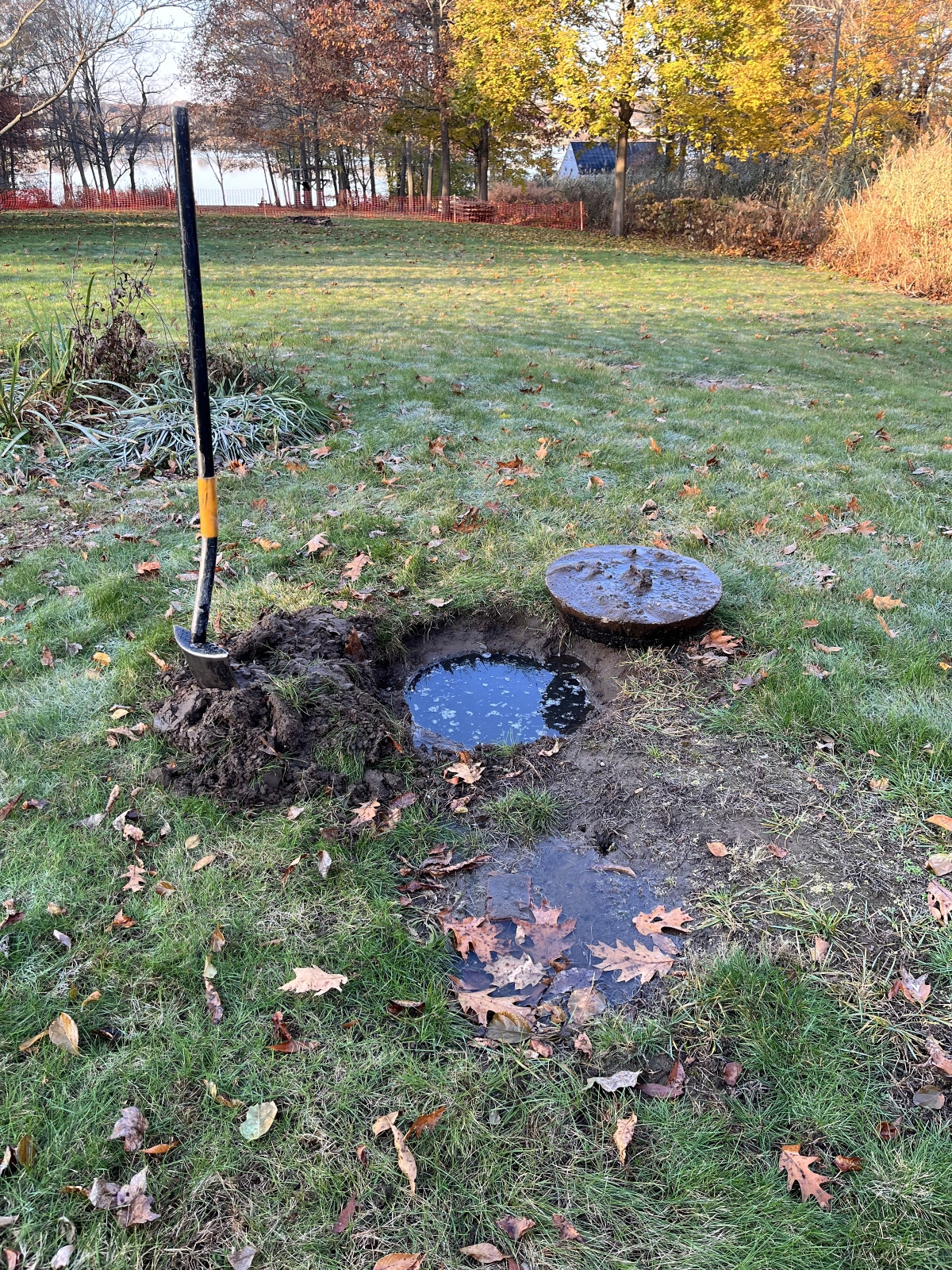


How Durham homeowners can tell if it's a clogged drain or a sewer line problem


A slow drain in the kitchen sink and a backed-up main sewer line can feel identical for the first few minutes. Water is not going where it should, and the natural instinct is to reach for a plunger or a bottle of drain cleaner. But treating a main line problem like a simple clog wastes time, and treating a simple clog like a main line emergency wastes money.
The difference usually shows up in the pattern, not the symptom itself. One slow drain almost always points to a localized blockage. Several drains acting up at once, especially the lowest ones in the house, point somewhere else entirely, toward the main sewer line that carries wastewater away from the entire property.
Durham's mix of older homes near the University of New Hampshire campus and newer construction further out means both kinds of problems show up regularly across town. Knowing which one you are looking at before calling for help changes what that call should actually be for.
In this article, you will learn about:
- The key differences between a single-drain clog and a main sewer line problem
- The specific symptoms that point to each one
- Why guessing wrong costs homeowners time and money
- What actually diagnoses the problem for certain
Keep reading to figure out which one you are dealing with before it turns into something bigger.
What separates a simple clog from a main line problem
A clogged drain and a sewer line problem sound like the same thing to most homeowners, but they sit in completely different parts of the plumbing system. Understanding where each one lives is the first step to telling them apart.
A branch line clog happens close to a single fixture. It is the toothpaste and hair caught in a bathroom sink trap, or the grease buildup in a kitchen line. A main line problem happens in the larger pipe that every branch line eventually feeds into, the one that carries everything toward the municipal connection or septic system.
Where each type of blockage actually sits
Every fixture in a home connects to a branch line, and every branch line eventually joins the main sewer line on its way out of the house. A blockage close to the fixture only affects that one drain. A blockage in the main line affects everything upstream of it, which in practice means most or all of the house at once.
- Branch line clogs: localized to one fixture, caused by hair, grease, soap scum, or small objects
- Main line blockages: affect multiple fixtures simultaneously, often caused by root intrusion, pipe age, or a significant blockage further down the line
- Venting issues: can mimic either problem by causing a drain that smells or gurgles without an actual clog present
- Pump failures: relevant for homes with ejector or sump pumps, and can look like a drainage problem when the actual issue is mechanical
That last point matters in Durham specifically, since sump pump failures can produce symptoms that look a lot like a sewer backup without actually involving the sewer line at all.
Why the distinction matters for the fix
A plunger or a bottle of drain cleaner might clear a branch line clog in minutes. Neither one does anything useful against a main line blockage, and both can waste time while a main line problem gets worse underneath the house.
Going the other direction wastes money instead of time. Calling for a full main line diagnostic when the actual problem is one slow bathroom sink means paying for a bigger service than the situation needs.
Why Durham's mix of older and newer homes complicates this
Durham's older neighborhoods, particularly those built before PVC pipe became standard, are more prone to main line issues from aging clay or cast iron pipe and the mature trees that often surround them. Newer construction around town is more likely to see branch line clogs from everyday use, since the pipe itself is younger and less prone to structural failure.
That does not mean a newer Durham home is immune to main line issues, only that the base rate differs. A sewer line inspection is still the only way to know for certain which category a given home falls into.
The symptoms that point to each problem
Some symptoms are specific enough to point clearly at one type of problem or the other. Learning to read them saves a homeowner from guessing wrong and either underreacting to a serious issue or overreacting to a minor one.
The clearest signal is whether the problem shows up in one place or several places at once. From there, a handful of secondary signs help confirm which direction the evidence points.
Signs that point to a simple branch line clog
A branch line clog tends to announce itself clearly and stay contained. The kitchen sink drains slowly while every other fixture in the house works normally, or a bathtub takes a while to empty but nothing else in the bathroom is affected.
- Only one fixture is affected, while everything else in the house drains normally
- The slowdown developed gradually over days or weeks rather than suddenly
- A plunger or a drain snake made at least some difference when tried
- No unusual odors or gurgling from other fixtures in the house
Those four signs together usually mean the fix is exactly as simple as it looks. A single fixture with a contained, gradual slowdown rarely signals the kind of emergency plumbing service situation happening deeper in the system.
Signs that point to a main sewer line problem
A main line problem behaves very differently. It tends to show up suddenly across multiple fixtures at once, and it often affects the lowest drains in the house first, since that is where wastewater backs up when it cannot continue on its intended path.
- Multiple drains slow down or back up around the same time
- Toilets gurgle or bubble when the washing machine or dishwasher runs
- Water backs up into a tub, shower, or floor drain when another fixture is used
- A sewage odor is noticeable near a floor drain, cleanout, or yard area
- The lowest drain in the house, often a basement floor drain, is the first to show a problem
Any single item on that list, taken alone, could have an innocent explanation. Multiple items together, especially the combination of several fixtures acting up at once and the lowest drain being affected first, is a strong signal that the problem sits closer to the main line than a drain snaking service alone can reach.
The health risk of waiting on the wrong diagnosis
Sewage that backs up into a home is not just an inconvenience. The CDC has documented that raw sewage and wastewater exposure carries real biological hazards, since contaminated water can carry pathogens capable of causing serious illness.
That risk is part of why guessing wrong in the direction of "it's probably nothing" matters more with sewage backups than with almost any other home maintenance issue. A main line problem that gets treated as a minor inconvenience can escalate into a basement full of contaminated water before anyone takes it seriously.
Why guessing wrong costs homeowners time and money
Misreading which type of problem is happening leads to one of two expensive mistakes. Either a homeowner underreacts to a main line issue and lets it develop into a full backup, or they overreact to a branch line clog and pay for a bigger diagnostic than the situation calls for.
Neither mistake is really about being careless. Both symptoms can look similar in the first hour, and without the right information, guessing in either direction is a coin flip.
The cost of underreacting
A main line problem that gets waved off as "probably just a clog" tends to get worse on its own timeline, not the homeowner's. Root growth continues, pipe corrosion continues, and pressure on a compromised section of pipe continues, all while the homeowner assumes the issue will resolve itself.
By the time a full backup happens, the fix is almost always more disruptive and more expensive than it would have been if the pattern had been caught earlier. The EPA's Clean Watersheds Needs Survey found that more than 40 percent of the nation's reported wastewater infrastructure needs involve repairing or replacing aging pipes and pump stations, the same category of failure that turns a manageable main line issue into an expensive one when it sits unaddressed. What might have been a straightforward drain cleaning service becomes an emergency call after hours, sometimes with cleanup costs layered on top of the actual repair.
The cost of overreacting
The opposite mistake is less dangerous but still avoidable. Paying for a full camera inspection and hydro jetting job when the real issue is a single clogged bathroom sink means spending more than the situation required, simply because the homeowner could not tell the difference on their own.
This is where the pattern-recognition signs matter most. A homeowner who checks whether the problem is isolated to one fixture or spread across several has a much better sense of what kind of help to actually call for.
Why a professional read is worth it either way
Even homeowners who read the signs correctly benefit from a professional confirming the diagnosis before any work begins. A video camera sewer inspection removes the guesswork entirely, showing the actual condition of the pipe rather than relying on symptoms alone.
That confirmation matters because some residential sewer repair situations look mild in their early stages. A homeowner might reasonably assume a minor issue is a branch line clog when a camera would show early root intrusion or a developing pitch problem that has not yet caused a dramatic symptom.
What actually diagnoses the problem for certain
Reading symptoms gets a homeowner most of the way to the right conclusion, but only an actual look inside the pipe settles the question with certainty. That certainty is what determines the right next step, whether that is a simple clearing or something more involved.
The good news is that this diagnostic step does not require guesswork or excavation on its own. It is a targeted, non-invasive process that gives a clear answer in a single visit in most cases.
How a camera inspection settles the question
A sewer camera inspection shows the interior condition of the pipe in real time, locating the exact spot and cause of any blockage rather than estimating from symptoms outside the house.
- A waterproof camera is fed through the cleanout or another access point
- The live video feed shows whether the issue is in a branch line or the main line
- The exact depth and location of any root intrusion, crack, or blockage is documented
- The homeowner gets a clear, specific answer about what caused the problem and what fixing it will involve
That level of certainty removes the guessing entirely. Pipe camera diagnostics leave a homeowner knowing exactly what they are dealing with, instead of hoping a plunger and a bottle of drain cleaner were the right call.
Matching the fix to the actual diagnosis
Once the camera confirms the location and nature of the problem, the right fix follows directly from what was found. A branch line clog usually clears with simple drain cleaning or snaking. A main line problem caused by roots or buildup often responds well to high pressure drain jetting, which clears the full diameter of the pipe rather than punching through a single blockage point.
- Camera inspection identifies the exact location and cause of the problem
- A branch line clog is cleared with standard drain cleaning or snaking
- A main line blockage from roots or buildup is typically resolved with hydro jetting
- A structurally failed section of main line, if found, is addressed with targeted excavation rather than repeated clearing
That last step, sewer line excavation, only becomes necessary when the pipe itself has physically failed rather than simply being blocked. Understanding cost factors for sewer replacement ahead of time helps homeowners plan for that scenario instead of being caught off guard. Even then, camera guidance means the dig stays limited to the actual problem spot rather than the full run of pipe.
When to call versus when to wait
A single, contained, gradually developing clog in one fixture is reasonable to try clearing on your own before calling for help. Multiple fixtures acting up at once, a sewage odor, or backup in the lowest drain in the house call for actual sewer cleaning solutions rather than another round of waiting it out.
Homes with a documented history of recurring drain clogs or known root intrusion benefit from a lower threshold for calling, since a property with that history is statistically more likely to be looking at a main line issue than a fresh branch line clog. Research from the U.S. Forest Service found that tree roots contribute to more than half of all sewer line blockages nationally, which is a meaningful risk factor for any Durham home with mature trees near its sewer line.
Conclusion
The line between a simple clogged drain and a real sewer line problem usually comes down to pattern, not severity in the first few minutes. One affected fixture with a gradual slowdown is almost always something a plunger or a bottle of drain cleaner can handle. Multiple fixtures acting up together, especially with the lowest drain in the house showing symptoms first, points toward the main line instead.
Durham's range of older and newer housing stock means both situations happen regularly across town, and neither one benefits from guessing. Reading the pattern correctly saves money on the branch line side and protects against a worsening main line problem on the other.
If you are seeing symptoms that fit the main line pattern, or you simply are not sure which one you are dealing with, get a professional look before deciding on your own. Reach out to Seacoast Sewer and Drain to schedule a camera inspection and find out exactly what is happening in your pipes.
Recent Blog Post
Customer Reviews