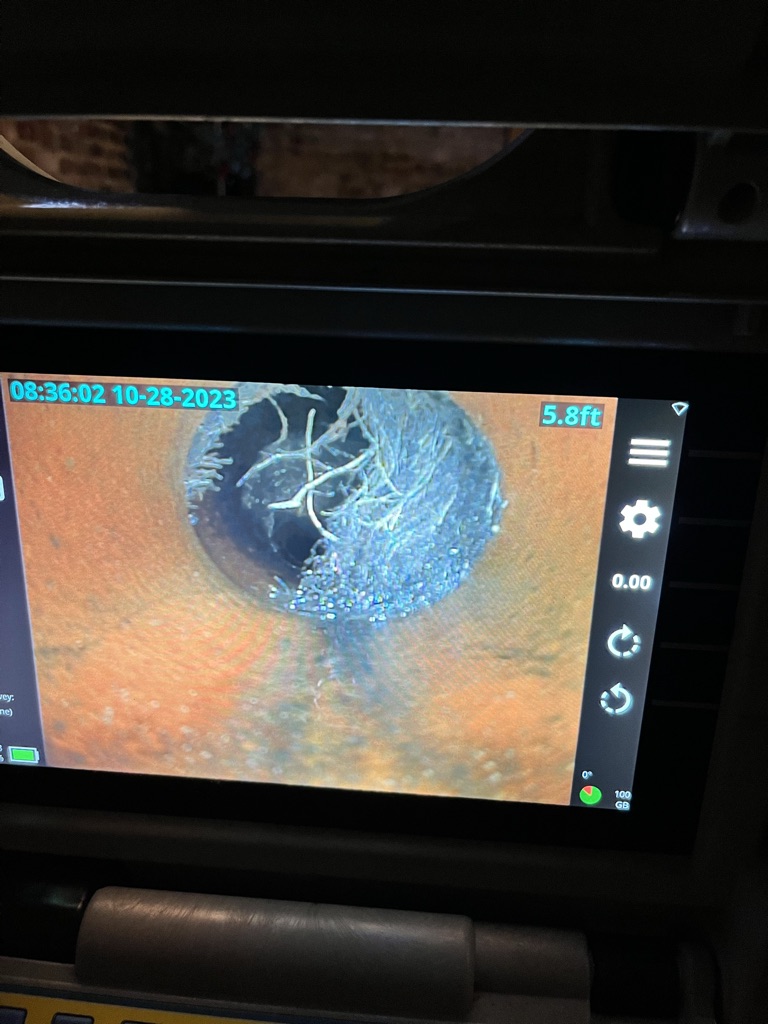


A video camera sewer inspection is one of the most effective diagnostic tools in modern plumbing, especially for homes in New England where aging infrastructure, shifting soil, and tree root intrusion frequently cause underground sewer issues. Instead of guessing what is happening beneath your yard or foundation, technicians can now see the exact condition of your pipes in real time.
This process removes uncertainty, reduces unnecessary digging, and allows for precise repair planning based on actual visual evidence rather than assumptions. For homeowners dealing with recurring backups or unexplained drainage problems, a sewer camera inspection is often the turning point between repeated temporary fixes and a permanent solution.
In this article, you will learn about:
- The moment you realize a hidden drain problem needs a closer look underground
- How the sewer camera actually travels through your plumbing system
- The types of problems a sewer camera can reveal in minutes
- What homeowners see in the inspection report and why it matters for repair decisions
- When a sewer camera inspection leads to immediate repair decisions
Keep reading to understand what happens at every step of the inspection process so you can make informed decisions about your sewer line before a small issue becomes an expensive emergency.
The moment you realize a hidden drain problem is not going away on its own and needs a closer look underground
Most sewer line problems begin subtly. A slow drain, occasional gurgling sound, or minor backup may seem like an inconvenience rather than a structural issue. However, when these symptoms repeat, they often indicate a deeper problem in the main sewer line that will not resolve without intervention.
Why recurring backups are the most common reason homeowners schedule an inspection
Recurring drainage issues are one of the strongest indicators that something is wrong beyond a simple clog. Unlike isolated blockages, recurring backups typically suggest a persistent obstruction or structural defect.
The pattern usually starts with an occasional slow drain in a single fixture. That progresses to a temporary backup that clears after plunging, then to a recurring blockage affecting multiple fixtures. In the worst cases, wastewater backs up through the lowest drains in the home or into the basement.
The difference between a temporary issue and a sewer line issue comes down to frequency, severity, and how the system responds to clearing. A temporary problem is rare, localized, and fully resolves after service. A sewer line issue is repeating, affects multiple fixtures throughout the home, and returns quickly after being cleared.
When problems return shortly after being cleared, it is often a sign that something is restricting flow deeper in the system.
How plumbers decide that a camera is needed instead of another drain cleaning
Before recommending a camera inspection, plumbers typically evaluate whether the issue is likely superficial or structural. If repeated drain cleaning methods fail to provide lasting results, a camera becomes necessary.
Several indicators point toward the need for a camera. These include multiple cleaning attempts with no long-term improvement, symptoms affecting more than one fixture, evidence of sewer odors or slow main line drainage, and backups returning within days of service.
The decision process moves through stages. An initial drain snaking is attempted first. When short-term improvement is followed by recurrence, the technician evaluates whether symptoms have expanded across the plumbing system. If they have, a camera inspection becomes the recommended next step.
At this point, continued cleaning without inspection becomes inefficient and potentially more costly.
The point where guessing stops being cost effective
Without visual confirmation, sewer problems are often treated symptom by symptom. This leads to repeated service calls without addressing the underlying cause.
Repeated drain cleaning carries a lower per-visit cost but leads to high cumulative expense over time. A camera inspection has a higher initial cost but produces an accurate diagnosis. That diagnosis then enables a targeted repair with a realistic path toward permanent resolution.
According to the U.S. Environmental Protection Agency, the nation faces at least $630 billion in wastewater infrastructure needs over the next 20 years, a figure driven in large part by aging pipe systems beneath residential neighborhoods just like those on the Seacoast.
Once symptoms persist, early detection through inspection becomes the most cost-effective path toward a permanent solution.
How the sewer camera actually travels through your plumbing system
A sewer camera inspection is a controlled process designed to navigate underground pipes while capturing high-resolution video of internal conditions. The goal is to identify blockages, damage, and structural changes without excavation.
Where access points are created before the inspection begins
Technicians must first locate a suitable entry point into the sewer system. This is typically a cleanout or accessible pipe opening.
The process starts with identifying the main sewer cleanout or entry point, followed by removing the cap or access fitting. The camera system is then inserted into the pipe, and controlled navigation through the line begins.
The most common access type is a cleanout, which serves as the primary entry point for inspections. When an exterior cleanout is unavailable, basement access may be used instead. For older or buried systems, an exterior yard access point may be necessary.
Proper access ensures full visibility of the sewer line from the home to the municipal connection or septic system.
How flexible camera systems navigate bends and pipe transitions
Modern sewer cameras are designed to move through complex pipe systems with multiple bends, diameter changes, and material transitions. These systems use flexible fiber optic cables, self-leveling camera heads, LED lighting for dark pipe environments, and locating transmitters for depth tracking.
The camera enters the main sewer line and the flex cable adjusts to pipe bends as it advances. It passes through joints and transitions while the technician monitors a live video feed. The equipment can navigate 90-degree bends with the flexible cable, capture pipe transitions in real time, and track long runs using a locating signal.
This technology allows technicians to inspect the full length of the system without excavation.
What technicians are looking for in real time as the camera moves
During the inspection, technicians analyze multiple indicators simultaneously. They are not only looking for visible damage but also subtle changes in pipe condition. Key observation points include flow restriction areas, structural deformation, root entry points, water pooling or backflow zones, and material deterioration.
Slow flow indicates a partial blockage. Standing water suggests a pipe slope issue. Visible roots mark a structural entry point. Cracks or offsets signal pipe failure risk. This real-time analysis allows for an immediate preliminary diagnosis before the inspection is even completed.
The types of problems a sewer camera can reveal in minutes
One of the biggest advantages of a sewer camera inspection is speed. Many serious issues can be identified within minutes of entering the system.
Tree root intrusion and how it appears on video
Tree root intrusion is one of the most common findings in New England sewer systems. On camera, roots appear as fibrous growths entering through joints or cracks. Early-stage intrusion looks like small hair-like strands extending into the pipe interior. As roots expand, they form dense mats that restrict flow. At their worst, they create complete blockages at pipe joints.
A study published by the U.S. Forest Service found that tree roots are responsible for more than half of all sewer blockages, with older pipe systems and joints being the most vulnerable entry points.
Root intrusion progresses from fine root entry through small cracks, to expansion inside the pipe, to partial flow restriction, and eventually to complete blockage formation. In many cases, root intrusion jetting can clear the immediate obstruction, but the camera footage determines whether the pipe itself has been compromised.
Cracks, offsets, and collapsed pipe sections underground
Structural damage is another critical finding during inspections. These issues often require more than cleaning and typically lead to repair or replacement recommendations. Common structural issues include longitudinal pipe cracks, offset joints from soil movement, partial pipe collapse from external pressure, and bellied or sagging pipe sections.
A crack creates leak and root entry risk. An offset disrupts flow through the line. A collapse causes complete blockage. The progression typically starts with minor crack formation, moves to joint separation or offset, leads to increasing flow restriction, and can end in full collapse.
Grease buildup and recurring blockage zones
Grease accumulation is often found in residential systems, especially where kitchen waste enters the sewer line. Grease solidifies in cooler underground temperatures, coats pipe walls, narrows the pipe diameter, traps debris, and accelerates blockage formation.
The buildup starts with a thin grease layer, then the pipe diameter narrows as the coating thickens. Debris accumulates on the greased surface and eventually a full blockage forms. Kitchen lines are most prone to grease clogs, while main lines tend to develop combined debris restrictions. Transition points between pipe sections are common recurring blockage zones.
What homeowners see in the inspection report and why it matters for repair decisions
After the inspection, homeowners receive a detailed report that includes video footage, technician notes, and repair recommendations.
How video footage is translated into repair recommendations
Technicians review the recorded footage to identify the exact location and severity of issues. The report generation process begins with video review and marking of issue points, followed by measurement of pipe depth and distance. Damage is then classified by severity, and a repair recommendation plan is created.
The report typically includes video footage for visual confirmation, a written summary with technical explanation, and location mapping for repair planning.
The difference between minor maintenance issues and structural damage
Not all findings require major repair. Some issues can be resolved with preventative cleaning or maintenance. Issues are generally classified into categories: minor buildup that requires cleaning, moderate intrusion that needs targeted service, and severe structural damage that calls for repair or replacement.
Low-severity findings typically lead to a recommendation for cleaning and monitoring. Medium-severity issues call for targeted repair. High-severity conditions require structural intervention, potentially including sewer line excavation and full pipe replacement.
Why documentation helps avoid unnecessary excavation
Video documentation provides proof of pipe condition, ensuring that excavation is only recommended when truly necessary. The benefits include eliminating guesswork in repair planning, preventing unnecessary digging, supporting insurance or property records, and helping prioritize repair urgency.
Researchers at Virginia Tech found that the nation's installed water pipeline infrastructure needs an estimated $3.6 trillion in replacements over the next 25 years, making accurate condition assessment through tools like camera inspection critical for homeowners who want to avoid premature or unnecessary replacement work.
Once the inspection is completed and the condition is documented, the repair plan is created, and excavation is avoided when the evidence shows it is not needed.
When a sewer camera inspection leads to immediate repair decisions
In some cases, inspection results clearly indicate that immediate action is required.
Situations where trenchless repair becomes the recommended solution
Trenchless methods are often recommended when pipes are damaged but still structurally intact. Common scenarios include cracked but aligned pipes, root intrusion without collapse, and corrosion in older pipe systems.
The decision process begins when damage is identified via camera. If structural integrity is confirmed, a lining or bursting method is selected and the repair is scheduled. Cracked pipes and root intrusion without collapse are well suited for trenchless repair. Severe collapse is not.
When full excavation is unavoidable based on pipe condition
Some conditions require full replacement due to structural failure. Excavation is required for completely collapsed pipe sections, severe misalignment or belly formation, and irreparable structural damage.
When severe damage is identified, trenchless options are ruled out, an excavation plan is developed, and full replacement is scheduled. In some cases, problems are found in areas that are too deep or too far from the structure for small-scale repair, and a specialized excavation crew is needed.
How inspection results affect cost and timeline planning
Inspection results directly influence project cost, duration, and complexity. Cleaning carries a short timeline and low cost impact. Trenchless repair involves a moderate timeline and medium cost. Excavation requires a longer timeline and carries a higher cost impact.
Accurate inspection ensures that homeowners receive realistic expectations before work begins.
Conclusion
A video camera sewer inspection is one of the most reliable ways to diagnose underground plumbing problems without unnecessary excavation. It provides a clear view of pipe condition, identifies the exact cause of recurring issues, and allows for precise repair planning based on real data rather than assumptions.
For homeowners in New England, where aging infrastructure and environmental conditions often contribute to sewer line problems, this technology is especially valuable. It helps distinguish between minor maintenance needs and serious structural damage, ensuring that repairs are both targeted and cost effective.
Ultimately, a camera inspection transforms uncertainty into clarity, allowing homeowners to make informed decisions about their plumbing system and avoid unnecessary disruption to their property. Contact Seacoast Sewer and Drain to schedule an inspection and get a clear picture of what is happening inside your sewer line.
Recent Blog Post
Customer Reviews