

Root intrusion in Dover, NH: Why it keeps coming back and what actually stops it


If you have already paid someone to clear roots out of your sewer line once, and the same clog shows up again a year or two later, you are not imagining it. Root intrusion has a well-earned reputation for coming back, and in a town like Dover with mature trees lining almost every older street, that reputation is well deserved.
The reason it returns is simple once you understand what is actually happening underground. A root does not visit a pipe once and leave. It finds a weak joint, grows toward the water and nutrients inside, and keeps expanding for as long as that joint stays damaged and that tree stays alive. Cutting the roots out clears the symptom, not the cause.
Stopping the cycle for good takes a different approach than most homeowners expect, and it usually starts with a video camera sewer inspection rather than guessing from the surface. That is the part most one-time fixes skip, and it is the part that actually keeps a Dover sewer line clear.
In this article, you will learn about:
- Why root intrusion happens in the first place and why it recurs
- The specific signs that point to roots rather than another type of clog
- The methods that actually clear roots versus the ones that only mask them
- How to stop the cycle instead of paying for the same fix every year
Keep reading to understand what is really going on underground in Dover and how to make a root problem actually stay gone.
Why root intrusion happens and why it keeps returning
Tree roots grow toward whatever gives them the best odds of survival, and a leaking sewer joint checks every box. It offers water, nutrients from wastewater, and a warm, protected space that most soil cannot match. Once a root finds that opening, it has no reason to stop growing.
This is why a one-time cut, even a thorough one, rarely solves the problem permanently. The tree that caused the intrusion is usually still standing in the same spot, and the joint that let the root in is usually still damaged in the same way. Everything that made the first intrusion possible is still true after the roots are cut.
How roots actually get into a pipe
Sewer pipe does not need a large opening for a root to find its way in. A hairline crack in an aging joint, especially in the clay or cast iron pipe common in older Dover homes, is enough for a thin feeder root to slip through.
Once inside, the root behaves differently than it would in open soil. The moist, nutrient-rich environment inside the pipe accelerates its growth, and it thickens fast enough to catch toilet paper, grease, and debris that would otherwise pass through without issue.
- The root enters through an existing crack, gap, or loose joint, it does not create the opening itself
- Growth accelerates once the root is inside the pipe due to constant moisture and nutrients
- The root thickens over time and starts trapping debris, which is when a homeowner usually first notices a slow drain
- Left alone, the root eventually cracks the pipe wider, letting in soil and more roots
That last point is why waiting rarely pays off. A small root problem today becomes one of the most common sewer backup problems within a few years if nothing addresses the actual opening the root is using.
Why Dover's older neighborhoods see this so often
Dover has a mix of housing ages, but its older neighborhoods share two things that make root intrusion common: mature trees that have had decades to establish deep root systems, and sewer pipe installed before PVC became the standard material.
According to research from the U.S. Forest Service, tree roots are a contributing factor in more than half of all sewer line blockages, and that risk climbs sharply in systems with joint-heavy pipe materials like clay and cast iron.
New Hampshire's housing stock skews older than much of the country. The U.S. Census Bureau reports that a large share of the state's owner-occupied homes were built well before PVC sewer pipe became standard, which means a meaningful number of Dover properties are still running on the exact pipe materials most vulnerable to root intrusion.
Why cutting roots alone does not fix the underlying issue
Removing roots from a pipe, whether by hand, cable, or jetting, addresses what is currently blocking the line. It does not address the crack or joint failure that let the roots in to begin with. That distinction is the entire reason root intrusion has a reputation for recurring.
- Roots are cut or jetted out, restoring flow through the pipe
- The joint or crack that let the roots in remains open and untreated
- New root growth finds the same opening within months to a few years
- The clog returns, often in the same spot as before
Skipping the second step is the most common reason homeowners end up paying for the same service call more than once. A sewer line inspection is what actually shows whether the underlying opening needs more than a clear-out.
Signs that point to roots rather than another type of clog
Not every slow drain is a root problem, and treating every clog as a root issue wastes time and money. But certain signs are specific enough to root intrusion that they are worth recognizing on their own, especially in an older Dover home with mature trees nearby.
The signs tend to build gradually rather than appear all at once. A homeowner who catches the early pattern usually has more options than one who waits for a full backup.
The pattern that usually points to roots
Root-related clogs behave differently than a single blocked fixture. Because the root growth typically sits in the main line rather than a branch line, the symptoms tend to show up across multiple fixtures at the same time rather than in just one drain.
- Gurgling sounds from a toilet when the washing machine or dishwasher drains
- Multiple slow drains throughout the house rather than one isolated fixture
- Sewage backing up into the lowest drain in the house, often a basement floor drain
- An unusually green or lush patch of lawn directly above the sewer line's path
- Recurring clogs in the same location despite regular use of a plunger or drain cleaner
A single item from that list is not necessarily alarming on its own. Several of them appearing together, especially with a recent history of root intrusion jetting, is a strong signal that the previous fix did not address the real cause.
Why the "same spot, different year" pattern is the clearest tell
If a homeowner has had roots cleared from the same section of pipe more than once, that repetition is itself diagnostic. It means the opening the roots are using was never actually closed, only cleared, and the tree responsible for the intrusion is still doing exactly what it was doing before.
What a camera inspection confirms that guesswork cannot
A sewer camera inspection shows the exact condition of the pipe at the point of intrusion, not just that roots are present. That distinction determines whether jetting alone will hold or whether the joint itself needs repair.
- A technician runs a waterproof camera through the cleanout or an access point
- The live feed shows the exact location, size, and depth of the root intrusion
- The condition of the surrounding pipe and joint is assessed, not just the blockage
- The homeowner gets a clear answer on whether clearing is enough or repair is needed
That level of detail is what separates a fix that holds from one that buys a year or two before the same call comes back in.
What actually clears roots versus what only masks the problem
Several methods can remove roots from a pipe, but they are not interchangeable. Some clear the immediate blockage without addressing the pipe's condition. Others actually restore the pipe enough to slow future intrusion.
Choosing the wrong one first is a common and expensive mistake, especially when a homeowner reaches for the fastest or cheapest option without knowing what the camera would have shown first.
Mechanical snaking versus hydro jetting
A cable or auger can cut through roots mechanically, and it works for a quick, temporary opening of the line. But cutting is not the same as clearing, and a closer look at hydro jetting versus power snaking shows why mechanical methods often leave root fragments and buildup along the pipe wall that regrow faster than a fully cleared line would.
Hydro jetting uses high-pressure water to scour the entire interior of the pipe, removing root material, grease, and buildup rather than just punching a hole through the blockage. For root-specific problems, jetting typically holds significantly longer than cable snaking alone.
- Mechanical snaking: fast and useful for an immediate emergency, but often leaves material behind
- Hydro jetting: clears the full diameter of the pipe, removing roots and buildup more completely
- Chemical root treatments: not a substitute for either, and not something we recommend as a primary fix
- Camera-guided jetting: combines visual confirmation with the more thorough clearing method
The right choice depends on what the camera shows and how the homeowner wants to weigh a faster short-term fix against a longer-lasting one. Either way, guessing at which method to use without first looking inside the pipe is how avoidable repeat visits happen.
When the joint or pipe itself needs repair, not just clearing
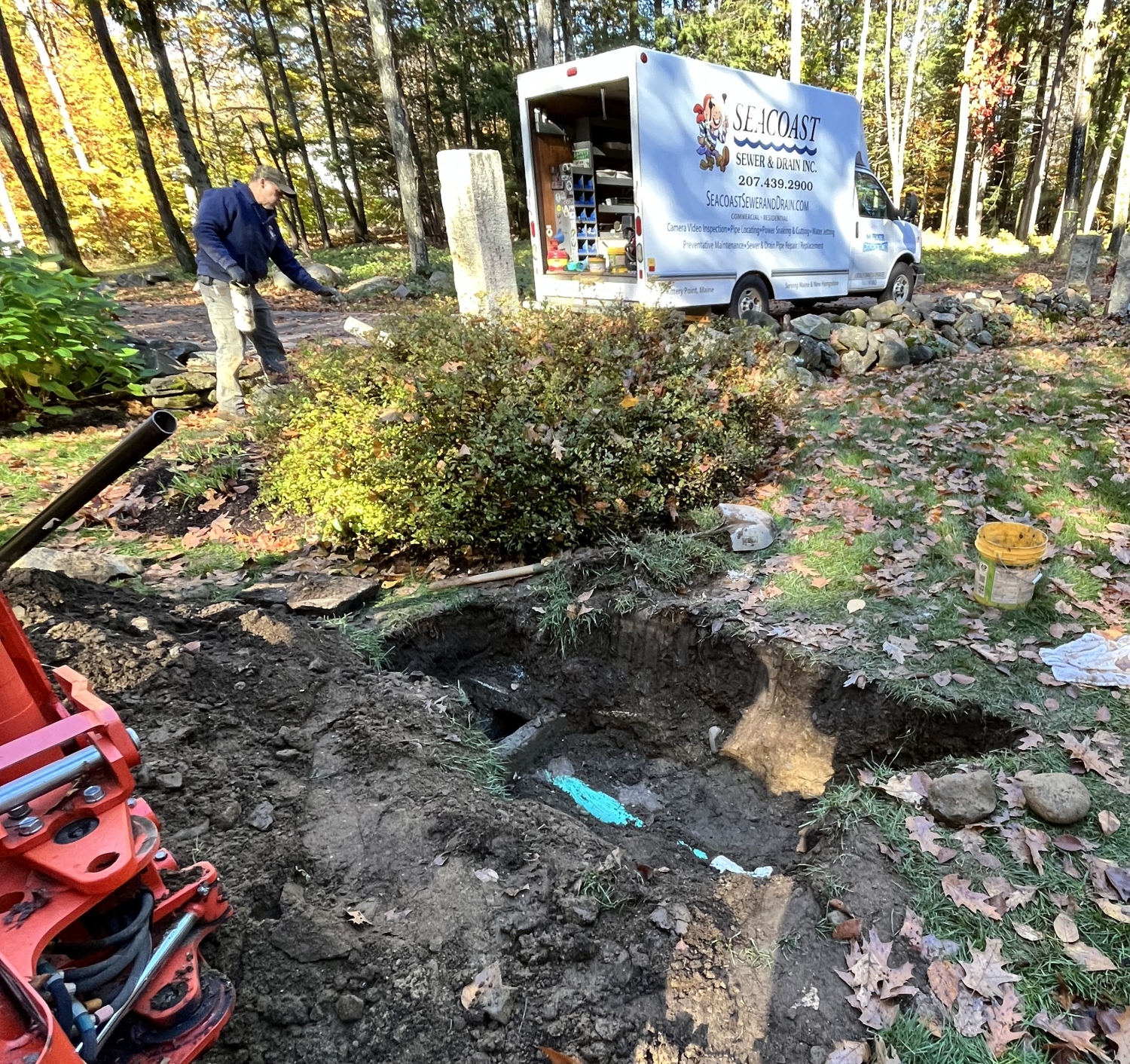
If a camera inspection shows a joint that has failed structurally, rather than just a minor gap letting in feeder roots, clearing the line will not prevent recurrence. In that case, the joint or the affected section of pipe needs actual repair, which usually means a targeted sewer line excavation limited to that specific spot.
This is often the step homeowners want to skip, since it costs more upfront than another round of jetting. But a structurally failed joint will keep admitting roots no matter how many times the line gets cleared, and delaying it often turns a planned repair into emergency sewer excavation later.
Dealing with the tree itself
Clearing the pipe and repairing the joint solves the plumbing side of the problem, but the tree that caused the intrusion is often still standing in the same spot with the same root system. Root barriers installed between the tree and the pipe can redirect future growth away from the line without requiring the tree's removal.
That option is not always practical, especially with mature trees close to a home's foundation, but it is worth discussing when a specific tree has already caused more than one intrusion event. A tree root sewer line repair that ignores the tree entirely is treating half the problem.
How to stop the cycle instead of paying for the same fix every year
Breaking the pattern of recurring root intrusion takes a combination of the right initial diagnosis, the right clearing method, and a maintenance rhythm that matches the actual risk on the property rather than a generic annual reminder.
The national scale of aging wastewater infrastructure makes this a widespread issue, not a Dover-specific quirk. The EPA's Clean Watersheds Needs Survey found that more than 40 percent of the nation's reported wastewater infrastructure needs involve repairing or replacing pipes and pump stations, much of it aging material exactly like the clay and cast iron common across older Seacoast homes.
Building a maintenance schedule around the actual risk
A property with a documented history of root intrusion is a different maintenance case than one with no history at all. Homes with known problem trees near the sewer line benefit from a more frequent check than a generic once-a-year default.
- Camera the line to establish a baseline once a root problem has occurred
- Schedule preventative jetting on a six-month cycle if roots are found to regrow quickly
- Reassess the schedule after a full season to see whether six months holds or a different interval fits better
- Revisit the joint repair question if the same section keeps needing attention despite regular maintenance
That kind of tailored schedule costs less over several years than repeatedly paying for emergency service calls after each new backup, the same logic behind checking whether a sump pump is ready before it is actually needed rather than after it fails.
Recognizing when it is time to stop clearing and start repairing
At some point, the math shifts from clearing roots being the cheaper option to it becoming the more expensive one. Understanding what causes recurring drain clogs helps homeowners recognize that a property needing root clearing more than twice in the same section within a couple of years has usually crossed that line, even if each individual visit felt affordable.
A follow-up video pipe inspection at that point gives a homeowner a clear, honest answer instead of another round of the same temporary fix. Sometimes the answer is that clearing really is still the right call. Sometimes it is not, and knowing which one applies saves money either way.
Conclusion
Root intrusion in a Dover sewer line is rarely a one-time event, and pretending otherwise is how the same clog ends up costing money year after year. The tree that caused it does not go anywhere on its own, and neither does the damaged joint that let the roots in the first place.
Breaking that cycle means treating the actual cause instead of just the symptom each time it flares up. A camera inspection that shows the real condition of the pipe, paired with the right clearing method for what is actually happening underground, is what turns a recurring problem into a solved one.
If your Dover home has dealt with root intrusion more than once, or you are noticing the early signs for the first time, get a professional look at what is happening before the next clog turns into a backup. Reach out to Seacoast Sewer and Drain to schedule a camera inspection and find out what will actually stop the cycle.
Recent Blog Post
Customer Reviews