

If your house in Portsmouth or Dover was built before the 1980s, your sewer line is probably older than you think, and it is working harder than a newer system ever would. Backups, slow drains, and gurgling toilets show up more often in older homes for reasons that have nothing to do with how well you take care of the place.
It usually comes down to what is buried under the yard. Clay and cast iron pipe, the two materials most common across the Seacoast before PVC took over, were built to last decades, but decades have already passed. Add tree roots, shifting soil, and old joints that were never meant to handle today's plumbing loads, and you get a system that is quietly aging out from underneath a perfectly good house.
None of that means you are stuck waiting for a disaster. Knowing what is actually happening underground, and catching it with a video camera sewer inspection before it turns into a flooded basement, is the difference between a planned repair and an emergency call at 2 a.m. That is the approach we take on every older home we look at across Portsmouth, Dover, Exeter, and the rest of the Seacoast.
In this article, you will learn about:
- What makes older sewer pipe more prone to failure
- The specific problems that show up in aging Seacoast homes
- How to spot early warning signs before a backup happens
- What a professional inspection and repair process actually looks like
Keep reading to understand why your home's age matters for your sewer line, and what you can do now to avoid a costly surprise later.
The pipe materials behind most older home sewer problems
Homes built before the 1980s across New Hampshire and Maine were almost never fitted with the PVC pipe that goes into new construction today. Builders used clay pipe, cast iron, or in some cases Orangeburg, a fiber-based pipe that has aged out of use entirely. Each material breaks down in its own way, and none of them were designed with an 80-year service life in mind under real-world conditions.
Cast iron corrodes from the inside as wastewater flows through it year after year. Clay is tough against chemicals but brittle against ground movement, which matters a lot in a region with hard winters and a freeze-thaw cycle that shifts soil every year. Orangeburg, if a home still has it, was never a good long-term material to begin with.
How clay and cast iron actually fail
Clay pipe holds up well against corrosion, but the joints between sections are its weak point. Every joint is an opportunity for a small gap, and small gaps are exactly what tree roots are looking for.
Cast iron takes the opposite path to failure. Corrosion builds up along the inside wall of the pipe, narrowing the space where wastewater can flow. Over the years, that buildup can restrict flow so much that a normal amount of household water backs up.
- Clay pipe: brittle joints, vulnerable to root intrusion and ground shifting
- Cast iron: internal corrosion that narrows the pipe over time
- Orangeburg: fiber-based, prone to collapsing under normal soil pressure
Neither failure mode announces itself with an obvious warning the first time it happens. That is why so many homeowners describe their first backup as coming out of nowhere, when the pipe had actually been narrowing or cracking for years.
Why homes in this region skew older
New Hampshire's housing stock leans noticeably older than much of the country. According to the U.S. Census Bureau, the median owner-occupied home in the state was built decades ago, and a meaningful share of homes across Portsmouth, Dover, and Exeter predate the shift to PVC sewer pipe entirely.
That housing age is not evenly distributed. Some Portsmouth neighborhoods were built in a single wave decades ago and share the same pipe material, installer, and soil conditions, which means several homes on the same street can start failing around the same time. If one neighbor just had a sewer backup, it is worth asking what year the street was developed.
What a repipe actually solves versus what it does not
Replacing a failing section of old pipe with modern material solves the material problem, but it does not automatically solve every underlying issue on the property. Root intrusion can return if a tree near the new line was never addressed. Poor pitch from the original installation can persist if the replacement follows the same path without correction.
- Camera inspection to confirm the extent and cause of the failure
- Targeted excavation limited to the actual problem area, not the whole yard
- Replacement with modern pipe matched to the correct pitch and depth
- A follow-up camera pass to confirm the fix before the ground is closed back up
Skipping any of those steps is how homeowners end up paying for a repair that fails again within a few years. A rushed patch job on old pipe rarely holds up the way a properly diagnosed and executed sewer line excavation does.
The problems that show up most in aging Seacoast homes
Older homes across Portsmouth, Dover, Exeter, and the surrounding Seacoast towns tend to develop a fairly predictable set of problems, and it almost always traces back to the combination of pipe age and mature trees. This region has no shortage of either.
Root intrusion is the single biggest culprit. According to research from the U.S. Forest Service, tree roots are a factor in more than half of all sewer line blockages nationwide, and older systems with joint-heavy clay or cast iron pipe are especially exposed. A tree planted the same year a house was built has had just as many decades to grow its root system toward that pipe.
Root intrusion and mature trees
Trees seek out water and nutrients wherever they can find them, and a leaking sewer joint is exactly that. Once a root finds its way in, it does not stop. It thickens over time, and that thickening is what eventually blocks the line completely or cracks the pipe wide enough to let more roots and soil inside.
The Seacoast's mature tree canopy, especially in older Portsmouth and Dover neighborhoods, means tree root damage to sewer lines is not a rare event. It is close to the default explanation whenever we camera a line in a home built before the 1980s.
- Recurring clogs in the same drain despite regular use of a plunger or store-bought drain cleaner
- Gurgling sounds from toilets or tub drains when the washing machine runs
- Unusually lush or green patches in the yard directly above the sewer line
- Slow drainage that affects multiple fixtures at once rather than just one
Any one of those signs on its own might not mean much. But when a homeowner notices two or three of them together, especially in a house with mature trees near the sewer line, it is worth getting a camera down there before the next heavy rain turns a slow drain into a backup.
Pipe age and pitch problems
Beyond roots, some older sewer lines simply were not installed with the pitch that modern code requires. A line with too little slope lets solids settle instead of flowing all the way to the main, which sets up recurring clogs even without any root activity at all.
This is harder for a homeowner to diagnose without a camera, because the symptoms look identical to a root problem from the outside. A slow drain is a slow drain until sewer line inspection actually shows what is happening inside the pipe.
Backups during heavy rain or high water table periods
Homes near the water, and there are plenty across York, Kittery, and Eliot, deal with an added complication. A high water table or heavy rainfall can put pressure on an already compromised pipe, pushing groundwater into small cracks that a dry-weather inspection might miss.
The EPA notes that leaky, aging sewer infrastructure allows stormwater and groundwater to infiltrate through cracks and faulty joints, which can overload a line that was already struggling. That kind of infiltration is a strong argument for inspecting an older line before a wet season, not after a backup already happened.
Spotting the warning signs before a backup happens
Most sewer emergencies were not actually sudden. They were the final stage of a problem that had been building for months or years, quietly enough that nobody noticed until the day the toilet would not flush and the basement floor drain started backing up instead.
Catching those earlier signals gives a homeowner options. A camera inspection at the first sign of trouble usually means a smaller, planned repair. Waiting until a full backup means an emergency call, a mess to clean up, and often a more invasive fix than would have been necessary earlier.
The signs worth acting on
Some symptoms are easy to write off as a one-time fluke. A slow drain after a big dinner party, for example, does not necessarily mean anything is wrong. But a pattern is different from a one-off event, and older homes tend to show patterns rather than isolated incidents.
- Multiple slow drains throughout the house at the same time
- Sewage odor near a floor drain, cleanout, or yard area
- Toilets that gurgle or bubble when other fixtures are used
- Water backing up into a tub or shower when the washing machine drains
- A cleanout cap that will not seal properly or looks corroded
Any single item on that list could have an innocent explanation. Several of them together, especially paired with a sewer backup problem that has already shown up once, is a strong reason to schedule an inspection before the problem escalates on its own timeline instead of yours.
Why a camera inspection settles the question
Guessing at what is wrong underground almost always leads to the wrong fix. A camera inspection removes the guesswork by showing the exact condition of the pipe, where the damage sits, and whether the cause is roots, corrosion, pitch, or something else entirely.
- A technician feeds a waterproof camera through the cleanout or an access point
- The live feed shows the pipe's interior condition in real time
- Any roots, cracks, offsets, or corrosion are located precisely, not estimated
- The homeowner gets a clear explanation of what is happening and what it will take to fix it
That precision matters because it means any sewer camera inspection leads to excavation that is targeted to the actual problem spot rather than guesswork that tears up more yard than necessary. It also means a homeowner is not paying to fix something that turns out to be fine.
What to expect from an inspection and repair on an older home
Once a camera confirms there is a real problem, the next question is almost always the same: how invasive does this get, and how long does it take. The honest answer depends on what the camera found, but the process itself follows a consistent path on most older Seacoast homes.
Right tool for the job matters here more than almost anywhere else in the trade. A line with heavy root intrusion needs different treatment than a line with pitch problems or corrosion, and starting with the wrong approach wastes time and money before the real fix even begins.
Hydro jetting versus excavation
Not every root or clog problem requires digging up the yard. If the pipe itself is structurally sound and the issue is buildup or root growth inside an otherwise intact line, hydro jetting can clear it without any excavation at all.
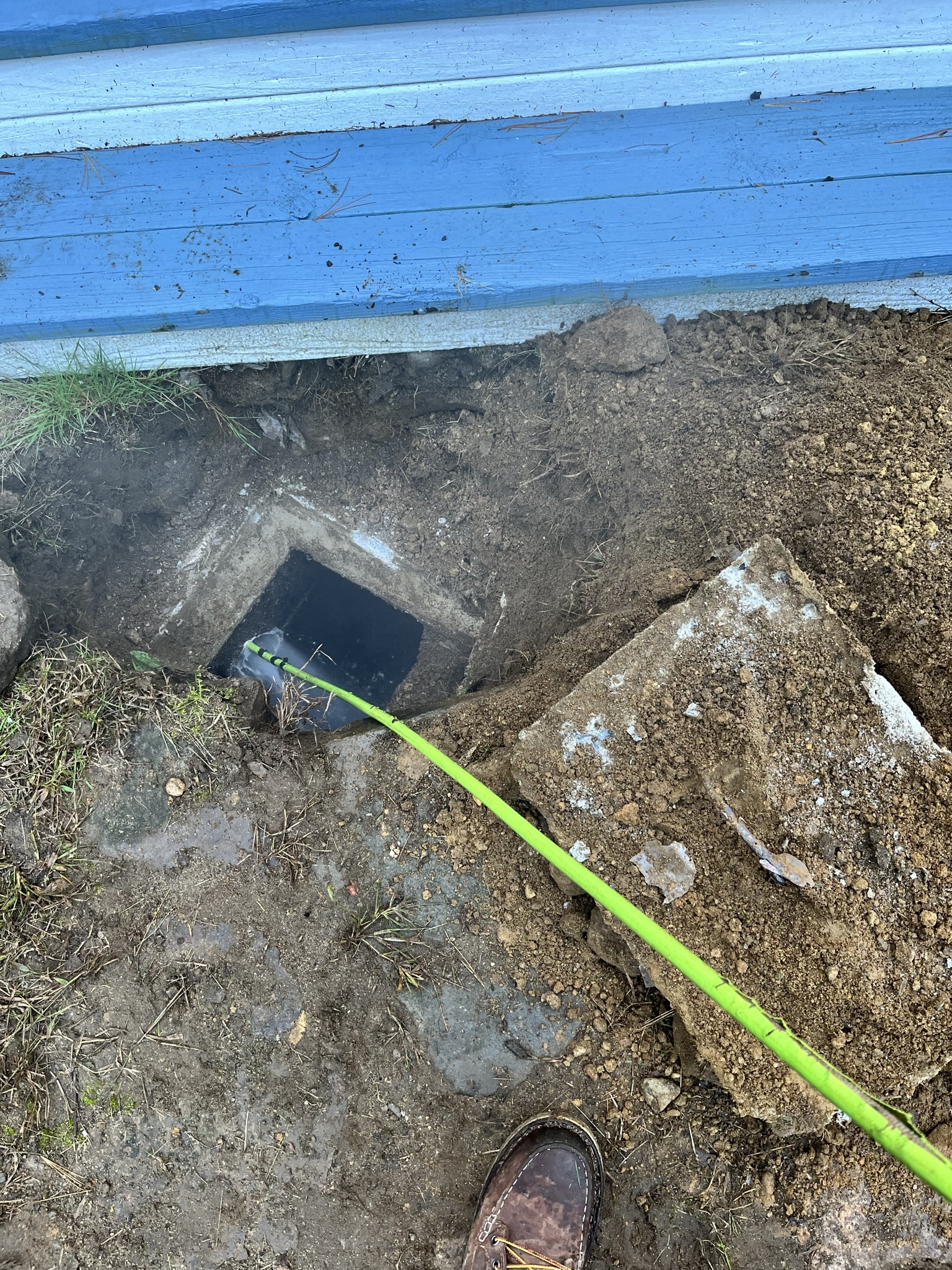
Excavation becomes necessary when the pipe itself has failed, whether that is a collapsed section, a severe crack, or corrosion that has narrowed cast iron pipe past the point jetting can help. In those cases, a sewer line excavation is the only real fix, and trying to avoid it usually just delays an inevitable and larger repair.
- Jetting works when the pipe structure is intact and the problem is buildup or roots inside the line
- Excavation is necessary when the pipe itself has physically failed or corroded through
- A camera inspection is what determines which category a given problem falls into
- Attempting the wrong fix first often means paying twice before the job is actually done
Homeowners sometimes assume excavation automatically means the whole yard gets torn up. In practice, camera-guided excavation on a Seacoast home is usually limited to the specific section that failed, not the full run of pipe from the house to the street.
What a same-day or short-timeline repair looks like
For issues that do not require full excavation, many Seacoast sewer and drain problems can be resolved same day. A camera inspection followed by the right drain cleaning method for the actual cause often clears the immediate issue in a single visit.
Larger excavation jobs take longer, but even those follow a predictable rhythm rather than an open-ended timeline. Digging is scheduled, the damaged section is replaced, and the ground is restored, with a follow-up camera pass to confirm the repair before anyone calls the job finished.
Preventing the next backup
Fixing one failure point does not guarantee the rest of an aging line will behave. Preventative maintenance, especially in a home with a documented history of root intrusion, catches new growth before it becomes the next emergency.
A maintenance schedule built around the specific pipe material and tree situation on a property beats a generic once-a-year reminder. Homes with a known root problem often benefit from a check every six months rather than waiting for the next symptom to show up on its own.
Conclusion
Owning an older home in Portsmouth, Dover, or anywhere else across the Seacoast means owning whatever pipe material was in the ground when that house was built. That is not a flaw in the house itself, it is just a fact of the region's housing stock, and it is manageable once you know what you are dealing with.
The homeowners who avoid the 2 a.m. emergency call are usually the ones who got a camera down their line before there was an obvious reason to. A slow drain, an odd smell, or a neighbor's recent backup are all reasonable prompts to get ahead of a problem instead of reacting to it.
Waiting rarely makes an aging sewer line better on its own. Roots keep growing, corrosion keeps narrowing the pipe, and the eventual repair tends to get more disruptive the longer it sits unaddressed. A short inspection now is almost always the cheaper and calmer path compared to the alternative.
If your home was built before the 1980s and you have not had your sewer line inspected, or you are already noticing slow drains or gurgling fixtures, reach out to Seacoast Sewer and Drain and get a camera down there before it becomes an emergency.
Recent Blog Post
Customer Reviews