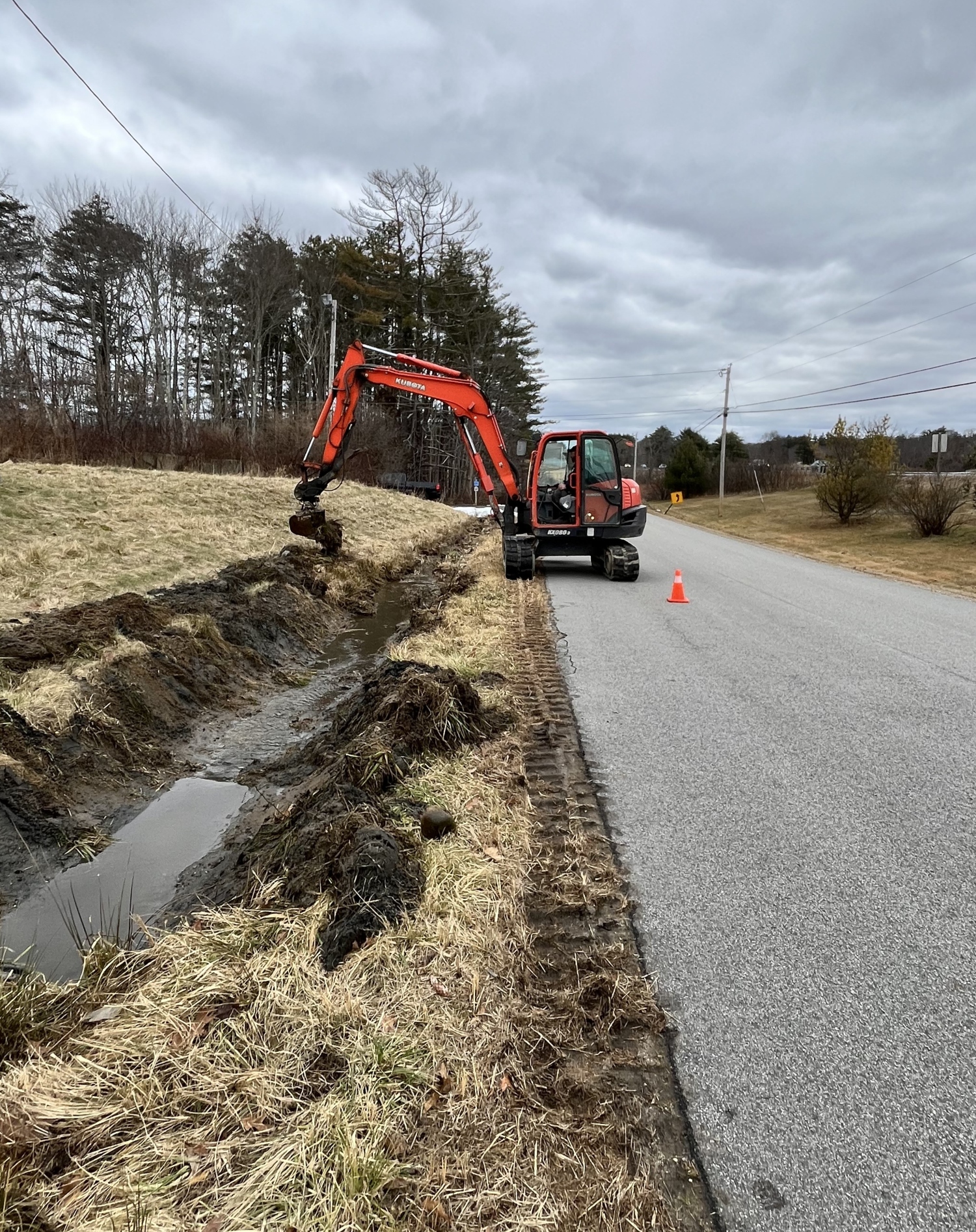


When a sewer line has failed badly enough, no amount of snaking or jetting is going to fix it. At that point, sewer line excavation is not an overreaction, it is the correct tool for a problem that has already gone past the point where anything less invasive would hold.
A lot of Seacoast homeowners hear the word excavation and picture their whole yard torn up for a week. In most cases, that is not what actually happens. Modern excavation on a residential sewer line is targeted, and the goal is always to disturb as little of the property as the job allows while still getting a permanent fix in the ground.
The real question homeowners need answered is not whether excavation is scary, it is whether their specific pipe actually needs it. Age, material, and the pattern of problems a camera inspection reveals all point toward an answer, and that answer is different for a 1960s clay line than it is for a newer PVC system.
In this article, you will learn about:
- When excavation is actually the right call
- What the excavation process looks like from start to finish
- How aging pipe materials factor into the decision
Keep reading to understand why excavation, done right, is often the fix that ends a cycle of repeat service calls for good.
When excavation is actually the right call
Excavation is not the default response to a sewer problem, and it should not be treated as one. Most drain and sewer issues resolve with cleaning solutions like jetting or a targeted spot repair, and a competent technician tries those options first.
The decision to excavate usually comes down to how much of the pipe has actually failed versus how much is still structurally sound. A short section with a single crack is a very different job than a line that has degraded across its full length.
A handful of situations consistently point toward excavation as the right next step rather than another round of maintenance.
- Repeated collapses or blockages at the same point in the line, even after cleaning
- A camera inspection showing multiple offset joints or cracks spread across a long section
- A fully collapsed section that no longer allows flow through at all
- Root intrusion severe enough that the pipe material itself has been compromised, not just blocked
- A line that has settled or bellied so badly that water pools instead of draining
Reading the camera footage for excavation signs
A video camera sewer inspection is almost always the deciding factor here, because it shows the technician exactly what kind of damage they are dealing with before anyone commits to digging. A hairline crack with clean edges reads very differently than a section of pipe that has visibly caved in on itself.
The location of the damage matters just as much as its severity. A problem sitting a few feet from a cleanout under open lawn is a straightforward dig. The same problem running beneath a driveway or a mature tree's root system changes the calculus considerably, and a crew should flag that difference before ever breaking ground.
Weighing repair against replacement
Once excavation is on the table, the next decision is how much of the line actually needs to come out. A spot repair replaces just the damaged section and reconnects it to the healthy pipe on either side. A full replacement takes out the entire run from the house to the connection point.
Neither option is automatically the right one. A single failure point in an otherwise sound line usually calls for a spot repair. A line with damage scattered across its length, or one old enough that the rest of it is likely close behind, often makes more sense to replace in full rather than paying for repeated digs over the following years.
A few factors typically tip the decision one way or the other once excavation is already on the table.
- How much of the pipe's total length shows damage on camera
- Whether the surrounding pipe material is the same age and likely to fail soon anyway
- The number of prior repair visits already made to the same section
- Access difficulty, since a harder dig makes doing the job once worth more
- Whether the home is being sold soon, where a documented full replacement carries more value
Homeowners weighing these factors should ask directly what the technician saw on camera and why they are recommending one option over the other, rather than assuming bigger always means better or that smaller always means cheaper in the long run.
When a second opinion is worth getting
Excavation is a bigger investment than most sewer repairs, and it is reasonable for a homeowner to want confirmation before committing to it. A second camera review, or a second technician's read on the same footage, is a fair request and a good one should never be refused.
What matters is that the recommendation lines up with what the footage actually shows. If a technician recommends full excavation but the video reveals only a single contained crack, that mismatch is worth asking about directly before scheduling the work.
A responsible sewer line repair contractor walks a homeowner through the footage themselves rather than just handing over a verbal conclusion, since seeing the actual condition of the pipe makes the reasoning behind the recommendation much easier to trust.
What the excavation process looks like from start to finish
Excavation follows a fairly predictable sequence, and knowing what to expect ahead of time takes a lot of the anxiety out of it for homeowners who have never had this kind of work done before.
The process starts well before anyone touches a shovel. Utility marking, precise locating of the damaged section, and a plan for where dirt and debris will go all happen first, since skipping that groundwork is how an emergency sewer excavation turns into a much bigger mess.
Every job follows roughly the same core sequence, even though the details shift based on depth, soil, and what is sitting on top of the pipe.
- Call for utility locates so gas, electric, and water lines are marked before digging starts
- Confirm the exact excavation point using pipe camera diagnostics and sonde tracing from the earlier inspection
- Remove and set aside any surface material, sod, pavers, or landscaping that needs to come up
- Dig down to the pipe, shoring the trench walls if depth requires it for safety
- Cut out and remove the damaged section or full run, depending on the scope decided earlier
- Install and connect the new pipe, checking slope carefully so water flows correctly
- Backfill the trench in layers, compacting as it goes to prevent future settling
- Restore the surface as closely as possible to its original condition
Why depth and soil conditions change the timeline
Not every excavation takes the same amount of time, and depth is usually the biggest variable. A sewer line sitting four feet down is a very different dig than one sitting closer to the surface, and Seacoast's mix of soil types, along with excavation drainage challenges across the region, adds another layer of unpredictability.
Rocky or dense soil slows the dig considerably compared to looser, sandier ground. A crew that hits ledge partway through a job has to adjust on the fly, and that is part of why choosing a reliable sewer line excavation company matters as much as the equipment they bring. This variability shows up across the whole Seacoast footprint, from Portsmouth's older lots down to Dover properties with their own mix of soil conditions.
Minimizing damage to the property
The biggest concern homeowners raise before excavation starts is what happens to their yard. A well-run job keeps the disturbed footprint as small as the pipe access genuinely requires, rather than opening up more ground than necessary just because it is faster.
Sod, plantings, and hardscaping that get removed during the dig should go back as close to their original placement as possible once the trench is backfilled and settled. It will not look untouched the day the crew leaves, but a properly compacted and restored trench should not leave a lasting depression or a visible scar within a season or two.
A few practical steps separate a clean restoration from a yard that never quite recovers.
- Setting aside sod in sections rather than discarding it, so original grass goes back down
- Compacting backfill in layers instead of dumping and packing it all at once
- Marking sprinkler lines, buried wiring, and landscape features before digging starts
- Photographing the site before work begins to guide an accurate restoration
- Following up a few weeks later to check for settling and add fill if needed
A crew that skips these steps might finish faster, but the homeowner usually pays for it later in an uneven lawn or a sunken trench line that needs a second visit to fix, which is exactly what good excavation service tips are meant to prevent.
Coordinating with excavation partners for larger jobs
Some jobs go beyond what a standard residential crew and equipment can handle on their own, particularly full-length replacements under driveways or through tight side-yard access, which is why a residential sewer line excavation plan should account for outside equipment up front. Bringing in trusted excavation partners for the heavier equipment on those larger projects keeps the timeline realistic without cutting corners on the actual repair.
That kind of coordination is part of why a straightforward answer up front about scope matters. A homeowner who understands early on that their job needs additional equipment is better positioned to plan around the disruption than one who finds out midway through.
How aging pipe materials factor into the decision
Pipe material drives a huge share of the excavation decision, since some materials simply reach the end of their useful life sooner than others regardless of how well they were maintained. Understanding what is actually in the ground changes the entire conversation about repair versus replacement.
The national picture on aging infrastructure backs up what shows up in the field locally.
According to the U.S. Environmental Protection Agency's most recent Clean Watersheds Needs Survey, the country faces a documented capital investment need of more than 630 billion dollars over the next twenty years to address wastewater and stormwater infrastructure, much of it tied to systems reaching the end of their designed service life.
That national trend plays out on a smaller scale in individual homes across the Seacoast, where a lot of the housing stock still runs on the original pipe installed decades ago.
Research from the Josiah Bartlett Center for Public Policy puts the median owner-occupied home across New England at a construction date in the early 1970s, right in the window when clay and cast iron were still the standard sewer line materials.
Clay and cast iron in older Seacoast homes
Homes built before the 1980s across Portsmouth and the surrounding Seacoast towns, including nearby Dover, commonly still have their original clay or cast iron sewer lines. Both materials were standard for their era, but both also come with specific failure patterns that show up clearly once a line reaches a certain age.
Clay is brittle and joins in short sections, which gives tree roots repeated opportunities to find their way in over the decades. Cast iron corrodes from the inside, gradually narrowing the usable diameter of the pipe until flow slows to a crawl even without a hard blockage.
Research compiled by the National Academies of Sciences notes that cast iron pipe manufactured after World War II generally carries an average service life closer to 75 years, well short of the 120-year lifespan credited to the thicker-walled cast iron produced in the late 1800s. Neither failure mode responds well to repeated cleaning alone once it reaches a certain point.
A camera inspection on an older Seacoast home tends to reveal a fairly consistent set of warning signs tied to these two materials.
- Multiple small root intrusions spaced along the same run of clay pipe
- Rough, corroded interior walls narrowing the effective diameter of cast iron
- Offset joints where sections have shifted slightly out of alignment over time
- Standing water in low spots where the pipe has begun to sag
- Flaking or scaling visible on the pipe's interior surface
None of these signs alone means the whole line needs to come out immediately, but seeing several of them together on the same inspection is a strong signal that the pipe is nearing the end of what repair alone can fix. A pattern like that, especially one tied to a recurring main sewer line blockage, is exactly the kind of finding that shifts the conversation from routine maintenance to a real repair-or-replace decision.
Why some older pipe still makes sense to repair rather than replace
Age alone is not a verdict. A clay or cast iron line that has held up well, shows minimal wear on camera, and has no history of repeat problems does not need to come out just because of its age. Plenty of older Seacoast homes run on original pipe that is still doing its job.
The deciding factor is condition, not calendar year. A sewer line inspection that shows a sound structure with only isolated, repairable damage supports a targeted fix. The same age of pipe showing widespread deterioration supports a different conversation entirely.
What newer materials change about the long-term picture
Modern PVC pipe resists root intrusion and corrosion far better than the materials it replaced, which is part of why a full replacement, while a bigger job upfront, often ends the cycle of recurring service calls for good. Homeowners who have called for the same drain problem more than once in a year or two are frequently dealing with an aging pipe issue that cleaning alone cannot solve.
That distinction matters for anyone trying to decide between another round of maintenance and committing to the larger project. A pipe that keeps failing in the same spot is telling you something cleaning cannot fix.
Conclusion
Excavation has a reputation for being the most disruptive option on the table, but for a sewer line that has genuinely reached the end of its usable life, it is often the fix that actually solves the problem instead of just delaying the next call. The goal is never to dig more than necessary, it is to fix what cleaning and repair alone cannot touch.
Seacoast homes span a wide range of ages and pipe materials, and that variety means no two excavation jobs look quite the same. What matters most is getting an honest read on the actual condition of your line before deciding what kind of work it needs.
If a camera inspection has already pointed toward a deeper problem, or if your home has never had one and you are dealing with recurring drain issues, it is worth finding out what is really going on underground. Contact Seacoast Sewer and Drain to talk through whether excavation is the right next step for your property.
Recent Blog Post
Customer Reviews