

You can't see what's happening thirty feet under your yard, and that's exactly the problem. A sewer line can be cracking, sagging, or slowly filling with roots for years before anything shows up inside the house, and by the time it does, you're usually looking at a bigger repair than if someone had caught it earlier.
A sewer inspection solves that blind spot. A technician runs a small waterproof camera through the line and watches the footage in real time, which turns guesswork into an actual diagnosis. Instead of snaking a line over and over and hoping it stays clear, you get to see exactly what's going on and exactly what it will take to fix it.
Across Portsmouth, Dover, Exeter, and Durham, this service comes up constantly, whether someone is buying an older home, dealing with a backup that keeps returning, or just trying to plan ahead before a small problem turns into an excavation. Knowing when it's worth calling for one, and what the footage actually tells you, puts you back in control of a part of your home you otherwise can't see at all.
In this article, you will learn about:
- The situations where a sewer inspection is worth scheduling
- How the camera equipment actually works during the process
- What technicians look for and how they interpret what they see
- What happens after the inspection, based on what the camera finds
Keep reading to understand when a camera inspection actually pays for itself, and what to expect once one is scheduled.
When does a sewer inspection actually make sense?
Not every clogged drain needs a camera. A single slow sink or a one-time backup usually clears with basic maintenance and doesn't call for anything more involved. But certain situations point directly toward getting eyes on the line before deciding what to do next.
The pattern worth watching for is repetition and uncertainty. If a problem keeps returning, or if a decision hinges on something you genuinely can't know without looking, that's when an inspection stops being optional and starts being the responsible move.
- Recurring backups that clear temporarily and then return within weeks or months
- Buying or selling a home with an older sewer lateral and no inspection history
- Slow drains throughout the house with no obvious single cause
- Planning a landscaping or construction project near a known sewer line
- Unusual yard conditions like sinkholes, soggy patches, or persistent odors
Why does buying an older home change the calculation?
A home's overall condition doesn't tell you much about what's happening underground. The sewer lateral is a completely separate system, often original to the house, and a general home inspection typically doesn't include it at all. That gap matters more the older the home is.
Homes built before PVC pipe became standard often still run on clay or cast iron laterals, materials that develop joint gaps and hairline cracks with age regardless of how well the rest of the property has been maintained.
Housing data compiled by the U.S. Census Bureau shows New Hampshire's owner-occupied homes have a median construction year in the late 1970s to early 1980s, which means a meaningful share of the region's housing stock predates the shift to modern PVC lateral standards. A camera inspection before closing tells you exactly what you're inheriting instead of finding out the hard way after move-in.
What does a recurring backup actually tell you?
A backup that clears and comes right back isn't bad luck. It's a signal that whatever caused it, whether a partial blockage, a root mass, or a structural defect, never actually went away. Clearing the symptom repeatedly without ever looking at the cause is how homeowners end up paying for the same service call every few months.
An inspection breaks that cycle by identifying the actual issue instead of just restoring flow one more time. Once you know what's really happening in the line, the next decision, whether that's a targeted repair or a change in maintenance schedule, is based on evidence instead of a guess.
Does a quiet yard mean the line is fine?
Not necessarily. Some of the most serious sewer problems develop with almost no visible warning until they're advanced. A slow-growing crack or a gradually narrowing pipe can sit unnoticed for years, especially in a lightly used line, before symptoms finally show up inside the house.
That's part of why age and material matter as much as current symptoms when deciding whether an inspection is worth scheduling.
The EPA notes the nation's sewer collection systems represent well over a trillion dollars in infrastructure value, and rehabilitating a line before it fails outright is consistently less costly than waiting for a full failure. Waiting for a visible problem sometimes means waiting for a much more expensive one.
How does the camera inspection process actually work?
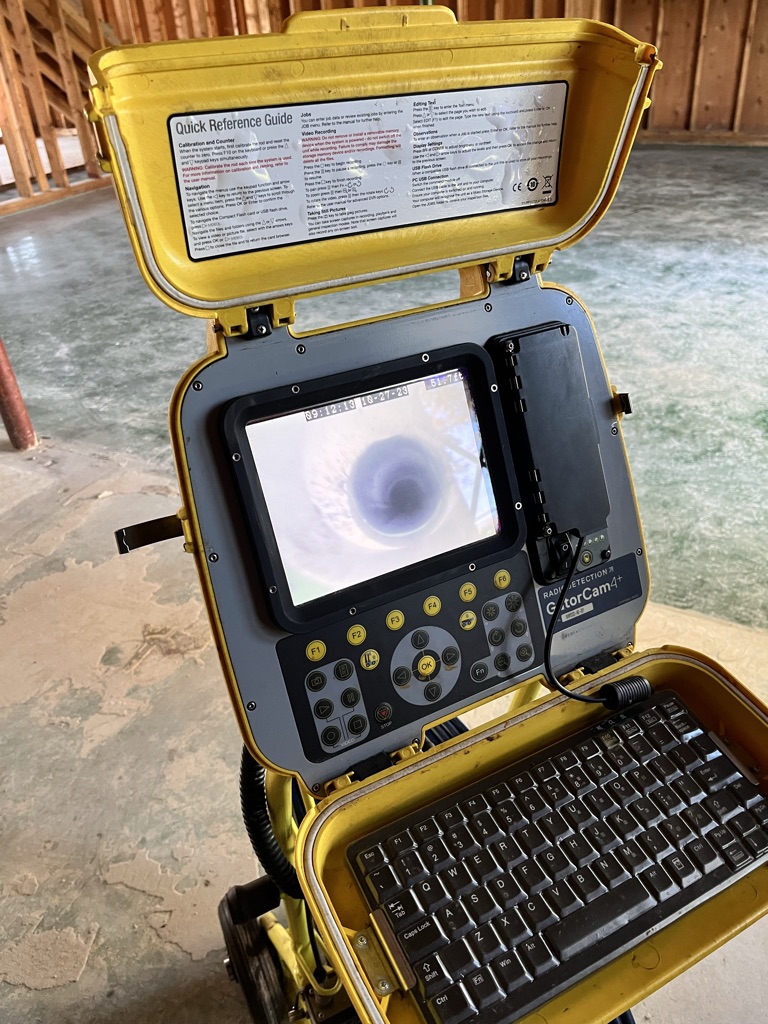
The equipment itself is straightforward, but it does something no other diagnostic tool can. A flexible cable with a waterproof camera on the end feeds directly into the sewer line through an existing cleanout or access point, sending a live video feed back to a monitor the technician watches in real time.
There's no digging, no guessing, and no cutting into the yard just to see what's going on. The technician can pause, zoom, and mark specific points along the footage, which turns a hidden system into something you can actually see and understand.
- The technician locates the nearest cleanout or access point
- The camera cable feeds into the line while recording continuous footage
- A built-in transmitter tracks the camera's exact position underground
- The technician narrates and documents any defects as they appear on screen
- The footage is reviewed afterward to confirm the diagnosis and plan next steps
What equipment makes this possible?
The camera itself is built to survive conditions that would ruin ordinary electronics: standing water, grease, and the tight curves of residential pipe. A locating transmitter built into the camera head lets the technician mark the exact depth and position of anything found, which matters enormously if excavation ever becomes necessary.
That locating function is what separates a professional inspection from just poking a camera down a pipe. Knowing precisely where a defect sits means any future repair can be targeted instead of exploratory, which keeps both the cost and the disruption to a minimum.
A few features distinguish inspection-grade equipment from a basic camera:
- Waterproof housing rated for continuous submersion
- A built-in transmitter for precise underground location tracking
- Adjustable lighting for accurate footage in dark, wet pipe
- A flexible cable that can navigate tight residential bends
That kind of equipment is what makes the footage genuinely useful for decision-making rather than just a rough look at the pipe. Without accurate locating and clear lighting, a homeowner would be left with video but no real way to act on it.
How long does an inspection typically take?
Most residential inspections run considerably faster than homeowners expect, often under an hour for a standard single-family lateral. The camera moves at a controlled pace so nothing gets missed, but there's no drilling, no exploratory digging, and no reason for the process to stretch into a full day.
Commercial properties or unusually long lines take more time simply because there's more pipe to cover. Either way, the inspection itself is far less disruptive than most people assume before they've had one done.
Can the same visit clear a blockage and inspect the line?
Often, yes. If a blockage is actively restricting flow, jetting or snaking to clear it first usually needs to happen before the camera can get a clean, useful look further down the line. Once the obstruction is gone, the same visit can move straight into inspection without scheduling a separate trip.
That combined approach also lets the technician see the pipe walls immediately after cleaning, which is often the clearest view you'll get of the line's true condition, roots and buildup aside.
What do technicians actually look for on the footage?
A camera inspection isn't just confirming that a pipe is blocked. It's building a complete picture of the line's condition, section by section, so that any recommendation that follows is based on what's actually there rather than an assumption.
Reading that footage takes trained judgment. The same crack that looks alarming on screen might be cosmetic, while a subtle discoloration in the wrong spot can point to a much bigger structural issue. A few specific things get flagged every time.
- Cracks, fractures, or holes in the pipe wall
- Root intrusion at joints or through existing damage
- Bellied or sagging sections holding standing water
- Corrosion or scaling narrowing the pipe's interior
- Offset or separated joints where sections no longer align
What separates a minor defect from a serious one?
Not every crack means the pipe needs to be replaced. A hairline fracture in an otherwise structurally sound section is often something to monitor or address with a targeted repair. A collapsed section, a severe belly holding standing water, or multiple failing joints along the same run is a different story entirely.
The footage lets a technician tell the difference with real evidence instead of guessing based on symptoms alone. That distinction is exactly what determines whether the fix is quick and inexpensive or requires a more involved repair.
Why does the location of a defect matter as much as the defect itself?
A crack near the house is a very different situation than the same crack near the municipal connection, both in terms of what caused it and what fixing it involves. The locating transmitter built into the camera equipment records exact depth and position, which becomes critical information the moment repair work needs to be scheduled.
Knowing precisely where a problem sits also means a repair crew doesn't have to dig exploratory holes along the entire line just to find it. The trench, if one is even needed, can be limited to the exact section that requires attention.
How does root intrusion typically appear on camera?
Roots show up as fine, hair-like growth at first, usually clustered right at a joint or crack where moisture is escaping the pipe. Left alone, that growth thickens into a mass that catches debris and restricts flow, which is exactly the pattern that leads to recurring backups.
Seeing root intrusion on camera also confirms something homeowners often don't expect: the roots are rarely the actual cause of the problem.
The USDA Forest Service has found that root intrusion tends to occur specifically where a line already has a leak or defect, with roots acting as opportunists rather than the original source of the damage. They're taking advantage of an existing leak or defect, which means the real fix addresses that opening, not just the roots growing through it.
What happens after the inspection is complete?
The footage itself is only useful if it leads somewhere. Once the inspection wraps up, the technician walks through what was found and what it actually means for the property, translating what showed up on screen into a plan that fits the situation.
That conversation matters as much as the inspection itself. A homeowner shouldn't be left holding a hard drive of footage with no explanation of what any of it means or what to do next.
- The technician reviews the footage findings section by section
- Any defects are ranked by severity and urgency
- Repair options are explained, including what each would involve
- A recommendation is made based on the pipe's actual condition, not assumptions
- Documentation is provided for future reference or, if relevant, a real estate transaction
What if the inspection finds nothing serious?
That's a genuinely good outcome, and it's more common than people expect, especially on newer PVC lines. A clean inspection means the line is functioning as it should, and it gives you a documented baseline to compare against if problems ever develop down the road.
Even a clean result has value beyond peace of mind. It rules out the sewer line as the source of a symptom you might be experiencing elsewhere, which narrows down the actual cause faster than continuing to guess.
When does the footage point toward a repair instead of monitoring?
A defect that's actively restricting flow, allowing groundwater infiltration, or showing signs of getting worse over time usually calls for action rather than a wait-and-see approach. The footage makes that distinction clear in a way that guesswork never could.
Depending on what's found, that might mean a localized spot repair rather than replacing the entire line. Knowing the exact extent of the damage, rather than assuming the worst, is often what keeps a repair from turning into a far more expensive project than it needed to be.
Does the inspection footage help if excavation becomes necessary?
Significantly. If a section of pipe genuinely needs to be dug up and replaced, the footage and location data taken during the inspection tell the crew exactly where to dig and how much pipe actually needs to come out, following the same step-by-step process used on any excavation. That precision keeps the yard disruption limited to the section that matters instead of the entire lateral.
It also means a homeowner isn't paying for guesswork disguised as excavation. Every decision from that point forward is tied to something the camera actually confirmed, not a worst-case assumption made without evidence.
Conclusion
A sewer inspection turns an invisible part of your home into something you can actually understand. Instead of guessing why a drain keeps backing up or hoping an older home's original pipe is holding up fine, you get real footage and a real answer, and every decision that follows is based on evidence instead of assumptions.
That matters most in a region like the Seacoast, where older homes, established trees, and harsh New England winters combine to put real stress on aging sewer lines. Catching a problem early, while it's still a minor repair, is almost always less disruptive and less expensive than waiting until it forces an emergency call.
If your drains keep backing up, you're buying a home with an unknown sewer history, or you just want to know what's actually happening underground, a camera inspection is the fastest way to find out for certain. Reach out to Seacoast Sewer and Drain and get a clear, documented look at your line before a small issue becomes a much bigger one.
Recent Blog Post
Customer Reviews