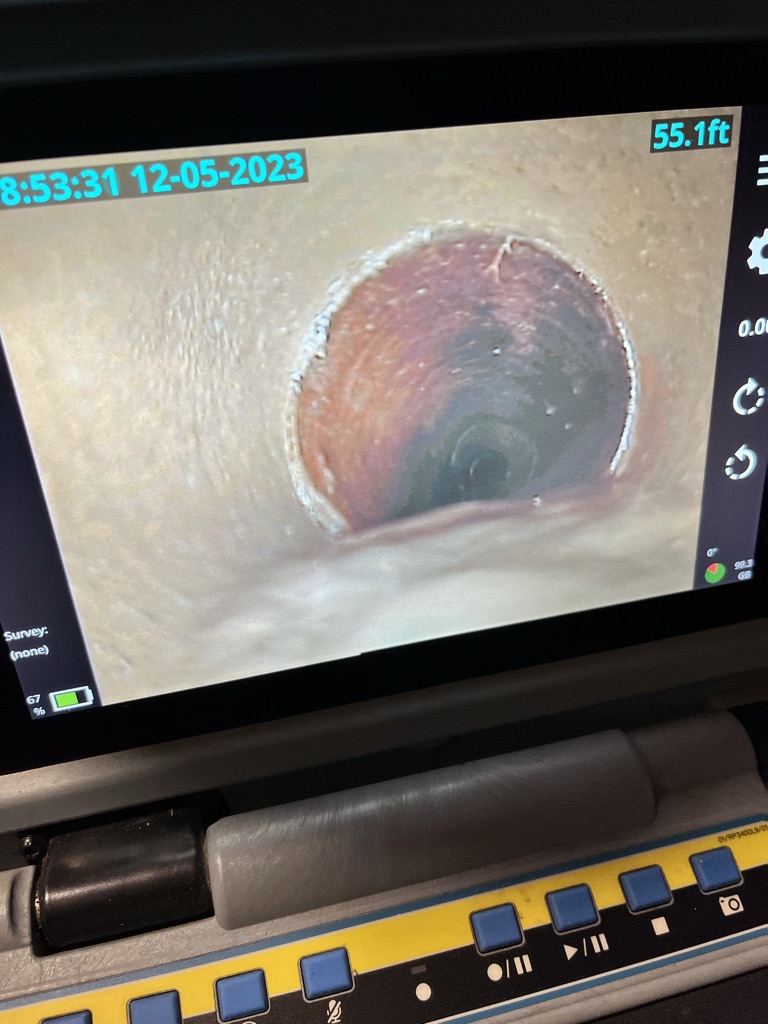


If your drains keep backing up and nobody can tell you why, a drain camera inspection in Portsmouth, NH is usually the fastest way to get a real answer. Instead of guessing at what is happening underground, a technician runs a waterproof camera through the line and shows you exactly where the problem sits, what caused it, and what it will take to fix it.
Portsmouth homes span a wide range of ages, from historic downtown properties to newer builds out toward the Route 1 bypass, and that mix means pipe materials and problems vary a lot from house to house. A camera inspection cuts through that uncertainty. It replaces guesswork with a clear picture of your actual pipe, not a generic assumption based on the age of your street.
A lot of homeowners only think to call for an inspection after a backup happens, but the camera is just as useful before anything goes wrong. Buying a house, dealing with recurring drain clogs that never quite clear completely, or noticing a damp spot in the yard are all good reasons to get a look inside the line before it turns into an emergency.
In this article, you will learn about:
- How a drain camera inspection actually works
- What the camera commonly finds in Portsmouth homes
- When to schedule one and what it costs to wait
Keep reading to find out how a 30 to 60 minute inspection can save you from a much bigger repair bill down the road.
How a drain camera inspection actually works
A camera inspection is a straightforward, non-invasive process, but there is more to it than just feeding a lens into a pipe. The technician needs access, a clean line to see through, and the right equipment to interpret what shows up on the monitor.
Before the camera goes in, the crew usually runs a snake or does a quick flush to clear loose debris that would otherwise block the view. A dirty line makes for a useless inspection, so this step matters more than most homeowners expect. Once the line is clear, the camera head goes in through a cleanout, a fixture drain, or occasionally the main vent stack.
The camera itself sits on a flexible fiber-optic cable with an LED light ring built into the head, which lets the technician see clearly even deep underground where there is zero natural light. As the cable feeds through the pipe, a self-leveling display on the monitor shows the interior walls in real time, so the technician is not staring at sideways or upside-down footage.
Equipment used during the inspection
Most Seacoast Sewer and Drain trucks carry a jetter and a camera rig together, since clearing and inspecting often happen back to back on the same visit. The camera setup usually includes a few core components working together.
- A push camera for shorter residential drain runs, typically 100 to 200 feet of cable
- A self-leveling camera head so the picture always displays right-side up regardless of pipe orientation
- A sonde, a small transmitter built into the camera head that lets a second technician trace the exact path and depth of the pipe from the surface
- A recording unit that saves footage so the homeowner has a copy for their records or for insurance purposes
The sonde is what makes it possible to mark the exact spot of a problem on your lawn without digging test holes first. That locating step alone can save hours of blind digging if sewer line excavation ends up being necessary.
Reading the footage in real time
The technician is not just watching for obvious blockages. They are trained to read the condition of the pipe itself: the material, the joints, the slope, and any signs of deterioration that might not be causing a problem yet but will eventually.
Root intrusion looks different from a grease clog, and a collapsed section looks nothing like a simple sag in the line. Distinguishing between these on the spot is part of why the person running the camera matters as much as the camera itself.
A trained eye is scanning for a handful of specific signals as the footage rolls, and each one points toward a different next step.
- Water pooling at the bottom of the frame, which usually signals a low or bellied section
- Root hairs or full root masses breaking through joints
- Discoloration or flaking on the pipe wall, a sign of corrosion in metal pipe
- Offset joints where two pipe sections no longer line up cleanly
- Debris buildup that narrows the visible diameter of the line
An experienced tech reads distance markers on the cable to know how far into the line a problem sits, which becomes critical if excavation or a spot repair is the next step. That distance reading is also what turns a vague description like "somewhere in the yard" into an exact number the crew can work from.
What happens after the camera comes out
Once the pass is complete, you get a plain-language explanation of what showed up, not just a data dump of footage. A good technician walks you through what the camera actually found and what it means for your house specifically.
That conversation should also include options, not a single forced conclusion. Sometimes a clean video means routine maintenance now can prevent a real problem later. Other times it points straight to a repair. Either way, you should leave the conversation understanding your own pipe better than you did an hour earlier.
What the camera commonly finds in Portsmouth homes
Portsmouth's mix of historic neighborhoods and newer development means the camera turns up a wide range of issues, and what it finds often depends heavily on when the home was built. According to research from the Josiah Bartlett Center for Public Policy, the median owner-occupied home across New England was built around 1972, which puts a large share of the regional housing stock squarely into the age range where original clay or cast iron sewer lines start showing real wear.
Older pipe does not fail all at once. It sends warning signs for months or sometimes years before a full backup happens, and the camera is what catches those signs early enough to matter.
Homeowners are often surprised by how much detail the video reveals, since most people have never actually seen inside their own plumbing before. A few problems show up again and again across the Seacoast.
- Root intrusion, where tree roots find a hairline crack or a loose joint and grow directly into the pipe
- Bellied or sagging sections, where part of the line has settled and now holds standing water
- Grease clog buildup narrowing the interior diameter of the pipe over time
- Cracked or offset joints in older clay and cast iron lines
- Collapsed or partially collapsed sections in the most severe cases
Root intrusion is consistently the most common cause of a sewer backup problem across the region, and it is rarely a quick fix once roots have worked their way fully into a joint. Age plays a role too, but so does simple proximity. A property with a big old maple near the sewer line is at higher risk regardless of how old the pipe itself is.
Why older Portsmouth homes see more root intrusion
Clay pipe was the standard material for decades, and it was installed with short sections joined together every few feet. Each joint is a potential entry point once the surrounding soil shifts or the seal degrades with age. Portsmouth's older neighborhoods, particularly the areas closer to downtown, have a higher concentration of this original clay pipe than the newer subdivisions.
Camera inspections in these neighborhoods often reveal multiple small tree root sewer line intrusions strung along the same line rather than one isolated spot. A few factors consistently drive how much root activity a given property has.
- Distance between mature trees and the sewer line path
- Species of tree, since some root systems are far more aggressive than others
- Age of the clay pipe and the condition of its joint seals
- Depth of the line, since shallower runs sit closer to active root zones
- Soil type, since looser soil lets roots travel farther toward a moisture source
That pattern tells the technician a lot about what kind of fix actually makes sense, since spot-repairing five separate joints is a different job than a single localized break. A property with several of these risk factors stacked together is a strong candidate for preventative drain maintenance on a fixed schedule rather than waiting for symptoms.
Newer construction has its own failure patterns
Newer Portsmouth homes generally run PVC, which resists roots far better than clay, but PVC lines are not immune to problems. Improper slope during installation, crushed sections from heavy equipment during later landscaping work, or a poorly sealed connection at a fitting all show up on camera in newer homes too.
A common misconception is that a newer house means a clean bill of health on the sewer line by default. A video pipe inspection treats every home the same way: it shows what is actually there, not what should theoretically be there based on the build date.
Commercial and rental property findings
Portsmouth's commercial corridors and rental-heavy neighborhoods present a different set of typical findings, and the gap between residential and commercial drain cleaning needs shows up clearly on camera. Higher usage volume accelerates grease buildup in restaurant and multi-unit lines specifically, and infrequent maintenance in rental properties means smaller problems often go unnoticed until they compound.
Property managers who schedule regular camera checks tend to catch this buildup before it becomes an emergency drain cleaning call during business hours, which matters even more for a restaurant that cannot afford to close its kitchen for a plumbing crisis.
When to schedule one and what it costs to wait
Timing matters more than most homeowners realize. A camera inspection scheduled at the right moment can turn an expensive emergency into a routine maintenance line item, while the same inspection scheduled too late just confirms damage that has already happened.
There is no single universal trigger for scheduling an inspection, but a handful of situations consistently point toward getting one sooner rather than later.
- You are buying or selling a home and want to know the real condition of the sewer line before closing
- Drains are slow throughout the house rather than just at one fixture, which usually points to the main line rather than a local clog
- You have had more than one backup in the past year, even if each one seemed minor on its own
- There are mature trees near your yard's sewer line path
- Your home was built before the 1980s and the sewer line has never been inspected
- You notice a soggy or unusually green patch of lawn along the line's likely path
Waiting past these signs it's time for a professional rarely saves money. A hairline root intrusion caught early might mean a straightforward session choosing between hydro jetting or power snaking. The same intrusion left alone for another year or two can progress into a full collapse that requires excavation, and the cost difference between those two outcomes is significant.
The real cost of delaying inspection
Every plumbing problem that starts small and gets ignored eventually becomes a bigger, more expensive problem, and sewer lines are no exception. A cracked joint with minor root intrusion is a contained issue. The same joint six months later, with the crack widened by continued root growth and seasonal ground movement, can mean the difference between a repair measured in hours and one measured in days.
Preparing drains for a New England winter matters more once a marginal issue is already on record. Ground freezing and thawing cycles put additional stress on pipes that are already compromised, and a problem discovered in October has a real chance of becoming a January emergency if nothing gets done about it.
According to the U.S. Environmental Protection Agency, roughly 5 to 10 percent of U.S. homes have easy-to-fix leaks that waste 90 gallons of water a day or more, a reminder that plenty of underground problems run quietly for a long time before anyone notices them at the surface.
What a healthy inspection outcome looks like
Not every camera inspection ends with bad news, and that is worth saying clearly. A clean line with good slope, tight joints, and no root activity is a genuinely good outcome, and it gives you a documented baseline to compare against in future years.
Skipping inspection entirely carries more than a repair-cost risk. Researchers at the University of Maryland School of Public Health found harmful bacteria in the vast majority of homes they tested after a sewage backup, with some pathogens still detectable more than six months after the event. A camera inspection that catches a developing problem before it turns into a full backup avoids that entire category of risk.
That baseline has real value. If a problem does show up two or three years later, having footage from a prior clean inspection helps pinpoint exactly when and how fast the issue developed, which speeds up the next diagnosis considerably.
Building inspection into a regular maintenance rhythm
Homeowners who treat camera inspection as a one-time event tend to miss the slow-building problems that develop between visits. Building it into a regular rhythm, alongside routine drain cleaning, catches issues while they are still cheap to fix.
A property with known root activity nearby benefits from a check every year or two. A newer home with PVC lines and no history of problems can usually go longer between inspections, though buying a first home is a good moment to establish that initial baseline regardless of the pipe's age. Pairing a camera check with seasonal tasks like a sump pump spring checklist keeps the whole drainage system on the same maintenance calendar instead of addressing each piece separately.
Conclusion
A drain camera inspection takes the guesswork out of a problem that is otherwise invisible until it is not. Whether you are dealing with slow drains right now or just want to know what is going on underground before it becomes a bigger issue, seeing the actual condition of your pipe beats guessing every time.
Portsmouth's mix of historic and newer housing means no two inspections tell quite the same story, and that is exactly why a generic assumption about your pipes is not good enough. The camera shows what is really there, and a technician who has seen hundreds of Seacoast lines can tell you what it actually means for your house.
If it has been a while since anyone has looked inside your sewer line, or if something about your drains has felt off lately, get it checked before a small issue turns into a weekend emergency. Contact Seacoast Sewer and Drain to schedule a drain camera inspection and get a clear answer instead of another guess.
Recent Blog Post
Customer Reviews